
Learn all about the cardiac bed in bed making: its purpose, step-by-step preparation procedure, required equipment, and nursing considerations for cardiac and respiratory patients.
About This Guide
A cardiac bed is a specially prepared bed for patients with heart failure and respiratory conditions who experience breathing difficulties. This guide covers the complete procedure, required equipment, positioning techniques, and nursing considerations.
At a Glance
- Special bed for cardiac & respiratory patients
- Relieves dyspnea and breathing difficulty
- Requires back rest, multiple pillows, and essential equipment
Cardiac Bed in Bed Making: Purpose, Procedure & Complete Nursing Guide
Introduction to Cardiac Bed
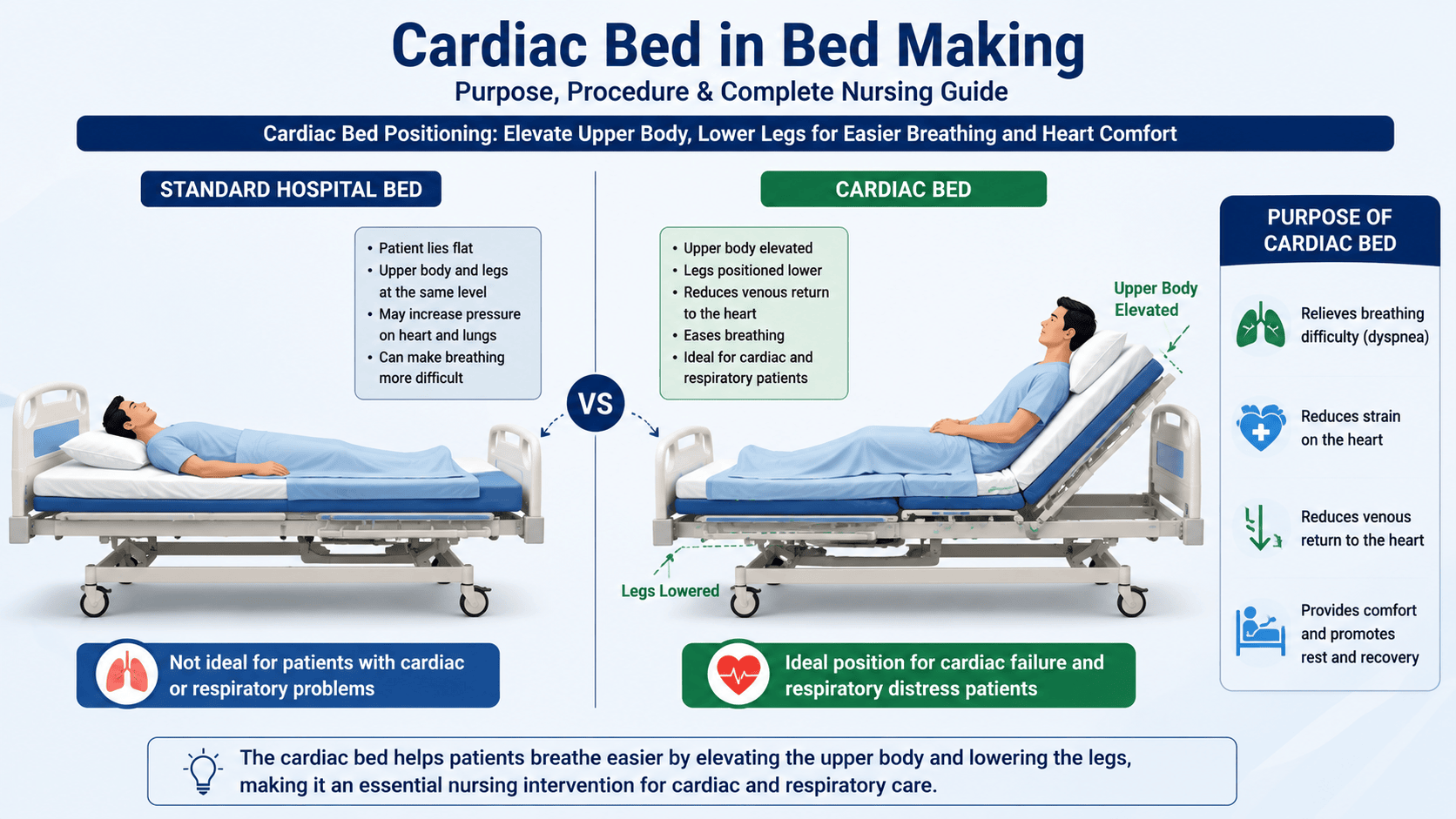
A cardiac bed is a specially prepared bed designed for patients suffering from cardiac failure and those with respiratory diseases experiencing respiratory embarrassment or dyspnea. Patients with severe heart conditions find it significantly easier to breathe when nursed on this bed, as it allows them to assume an upright or semi-upright position. Unlike a standard bed, the cardiac bed is arranged to reduce venous return to the heart—achieved by positioning the upper body high while keeping the legs positioned lower. This specialized bed is one of several therapeutic bed types in nursing, including closed beds, open beds, occupied beds, and postoperative beds. The primary purpose of the cardiac bed is to prepare a comfortable and safe environment for cardiac patients while relieving their breathing difficulties.
Purpose of Cardiac Bed
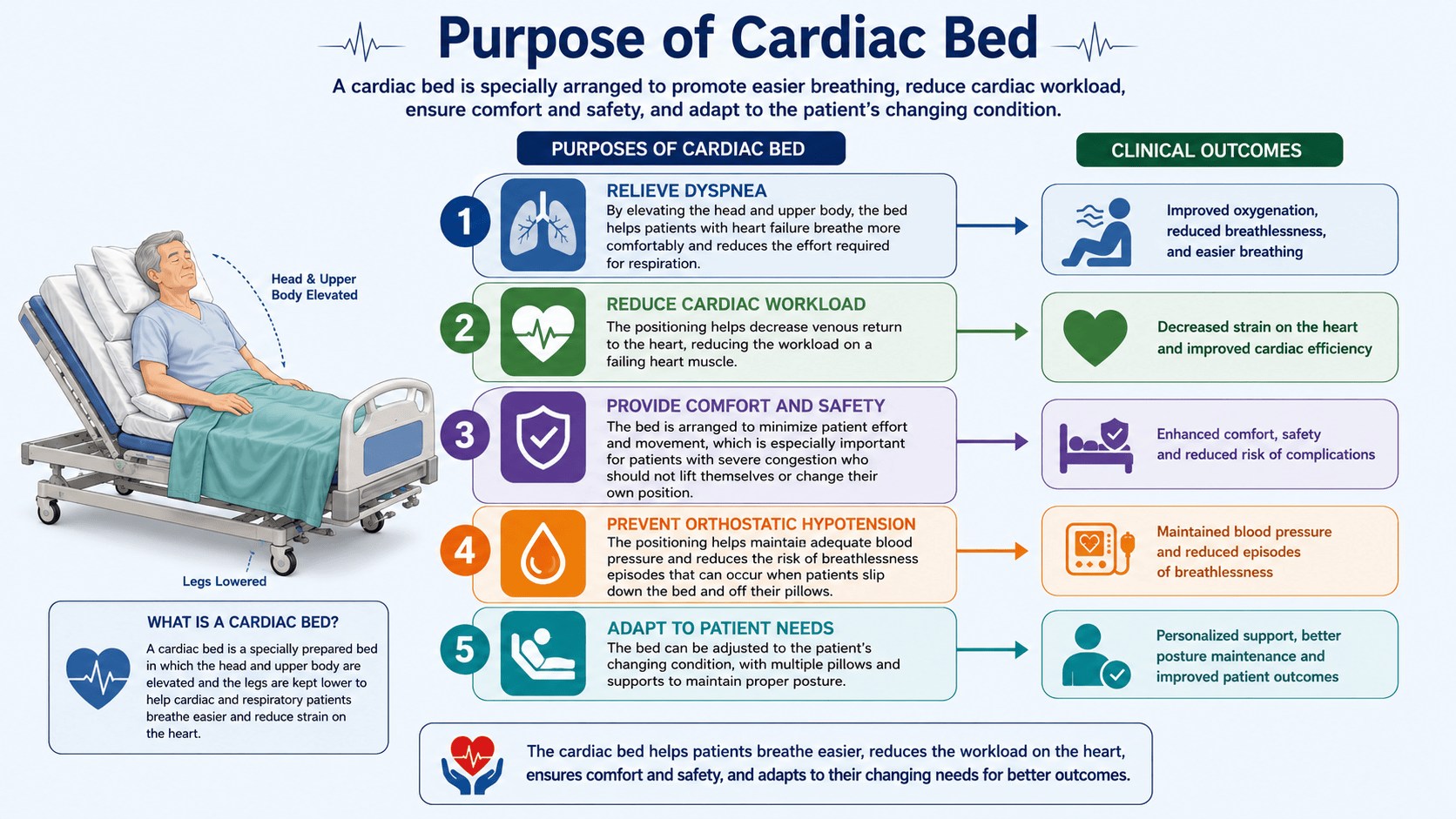
The cardiac bed serves several critical purposes in patient care:
Relieve Dyspnea – By elevating the head and upper body, the bed helps patients with heart failure breathe more comfortably and reduces the effort required for respiration.
Reduce Cardiac Workload – The positioning helps decrease venous return to the heart, reducing the workload on a failing heart muscle.
Provide Comfort and Safety – The bed is arranged to minimize patient effort and movement, which is especially important for patients with severe congestion who should not lift themselves or change their own position.
Prevent Orthostatic Hypotension – The positioning helps maintain adequate blood pressure and reduces the risk of breathlessness episodes that can occur when patients slip down the bed and off their pillows.
Adapt to Patient Needs – The bed can be adjusted to the patient’s changing condition, with multiple pillows and supports to maintain proper posture.
Required Equipment and Materials
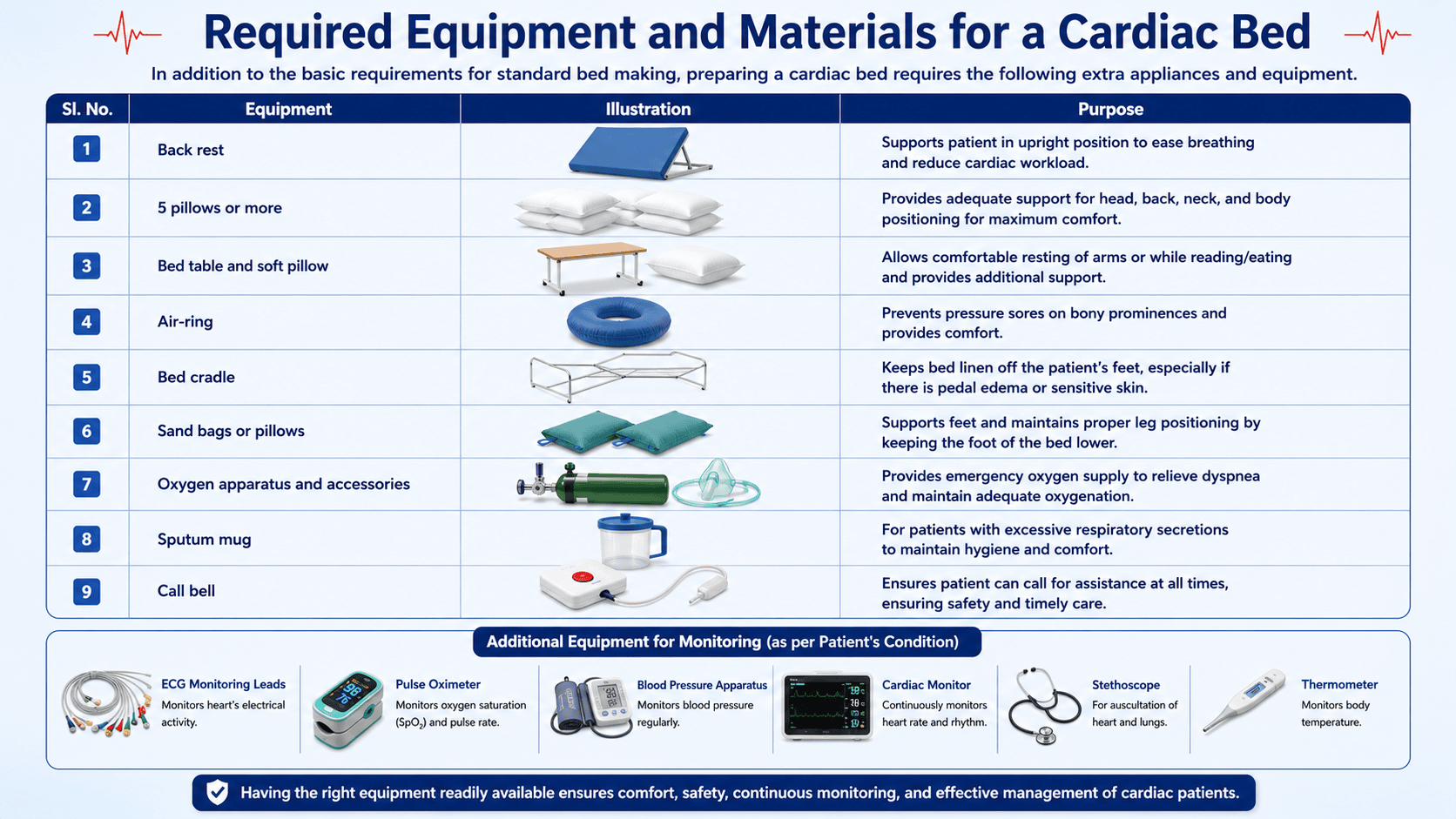
In addition to the basic requirements for standard bed making, preparing a cardiac bed requires the following extra appliances and equipment:
Equipment & Purpose
- Back rest – Supports patient in upright position
- 5 pillows or more – Provides adequate support for head, back, and positioning
- Bed table and soft pillow – Allows comfortable resting position and additional support
- Air-ring – Prevents pressure sores and provides comfort
- Bed cradle – Keeps bed linen off the patient’s feet if there is pedal edema
- Sand bags or pillows – Supports feet and maintains proper leg positioning
- Oxygen apparatus and accessories – Emergency oxygen supply readily available
- Sputum mug – For patients with excessive secretions
- Call bell – Ensures patient can call for assistance at all times
Additional equipment for monitoring may include ECG monitoring leads, pulse oximeter, blood pressure apparatus, and other cardiac monitoring devices.
Step-by-Step Procedure for Making a Cardiac Bed
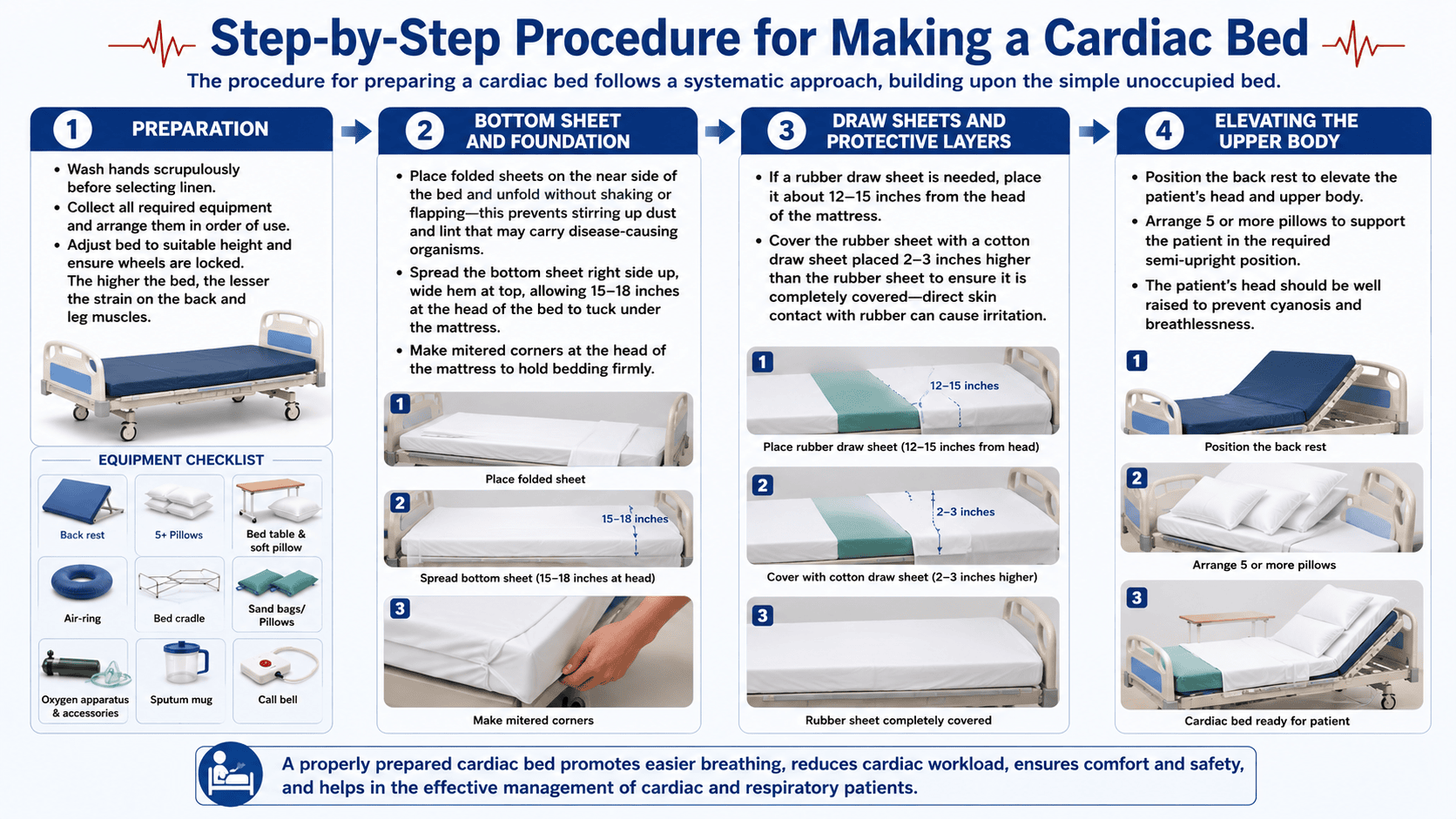
Step 1 – Preparation:
- Wash hands scrupulously before selecting linen.
- Collect all required equipment and arrange them in order of use.
- Adjust bed to suitable height and ensure wheels are locked. The higher the bed, the lesser the strain on the back and leg muscles.
Step 2 – Bottom Sheet and Foundation:
- Place folded sheets on the near side of the bed and unfold without shaking or flapping—this prevents stirring up dust and lint that may carry disease-causing organisms.
- Spread the bottom sheet right side up, wide hem at top, allowing 15–18 inches at the head of the bed to tuck under the mattress.
- Make mitered corners at the head of the mattress to hold bedding firmly.
Step 3 – Draw Sheets and Protective Layers:
- If a rubber draw sheet is needed, place it about 12–15 inches from the head of the mattress.
- Cover the rubber sheet with a cotton draw sheet placed 2–3 inches higher than the rubber sheet to ensure it is completely covered—direct skin contact with rubber can cause irritation.
Step 4 – Elevating the Upper Body:
- Position the back rest to elevate the patient’s head and upper body.
- Arrange 5 or more pillows to support the patient in the required semi-upright position.
- The patient’s head should be well raised to prevent cyanosis and breathlessness.
Patient Positioning and Nursing Considerations
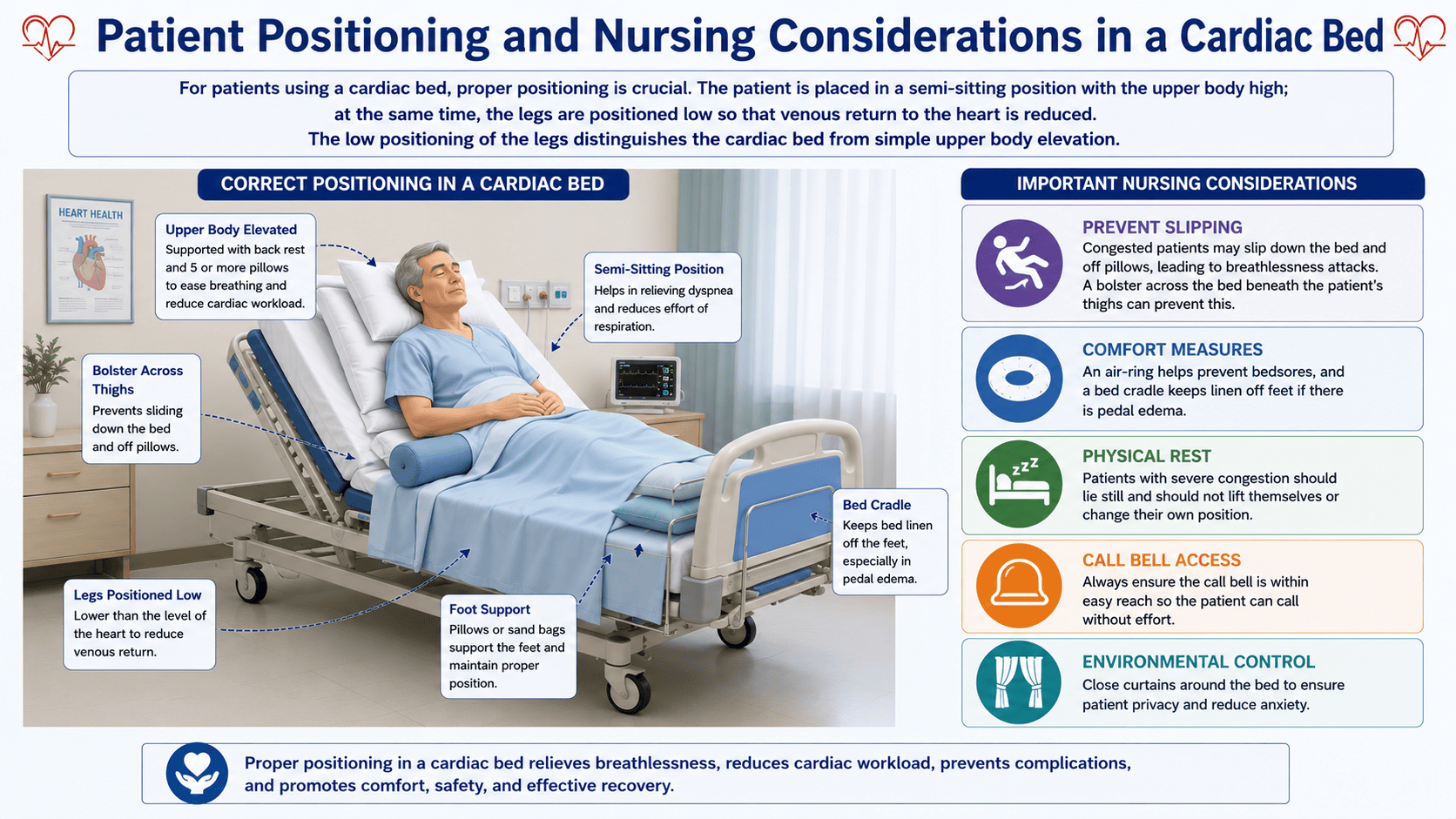
For patients using a cardiac bed, proper positioning is crucial. The patient is placed in a semi-sitting position with the upper body high; at the same time, the legs are positioned low so that venous return to the heart is reduced. The low positioning of the legs distinguishes the cardiac bed from simple upper body elevation.
Important nursing considerations:
- Prevent Slipping – Congested patients may slip down the bed and off pillows, leading to breathlessness attacks. A bolster across the bed beneath the patient’s thighs can prevent this.
- Comfort Measures – An air-ring helps prevent bedsores, and a bed cradle keeps linen off feet if there is pedal edema.
- Physical Rest – Patients with severe congestion should lie still and should not lift themselves or change their own position.
- Call Bell Access – Always ensure the call bell is within easy reach so the patient can call without effort.
- Environmental Control – Close curtains around the bed to ensure patient privacy and reduce anxiety.
Conclusion and Additional Resources
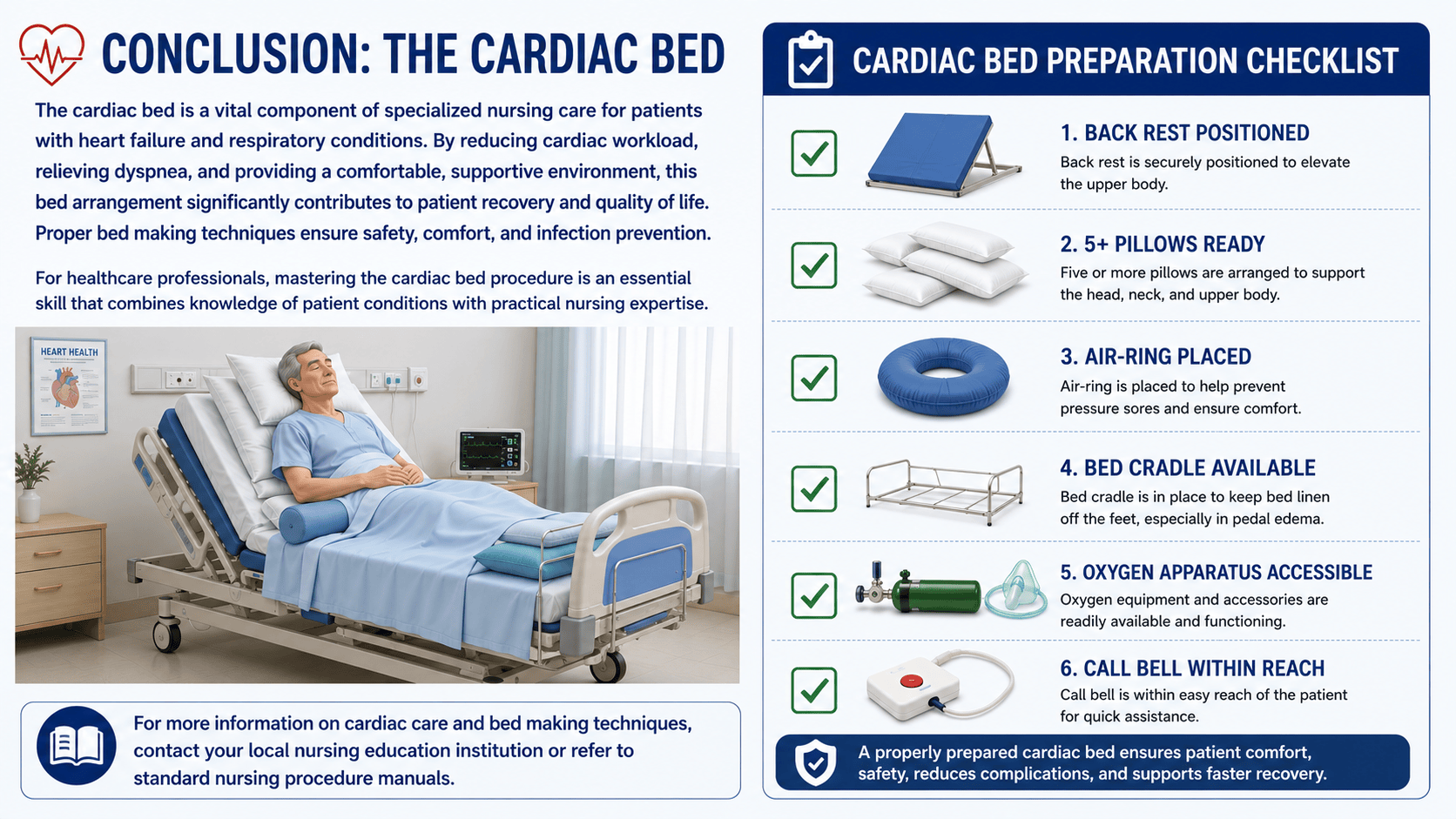
The cardiac bed is a vital component of specialized nursing care for patients with heart failure and respiratory conditions. By reducing cardiac workload, relieving dyspnea, and providing a comfortable, supportive environment, this bed arrangement significantly contributes to patient recovery and quality of life. Proper bed making techniques ensure safety, comfort, and infection prevention. For healthcare professionals, mastering the cardiac bed procedure is an essential skill that combines knowledge of patient conditions with practical nursing expertise.
For more information on cardiac care and bed making techniques, contact us