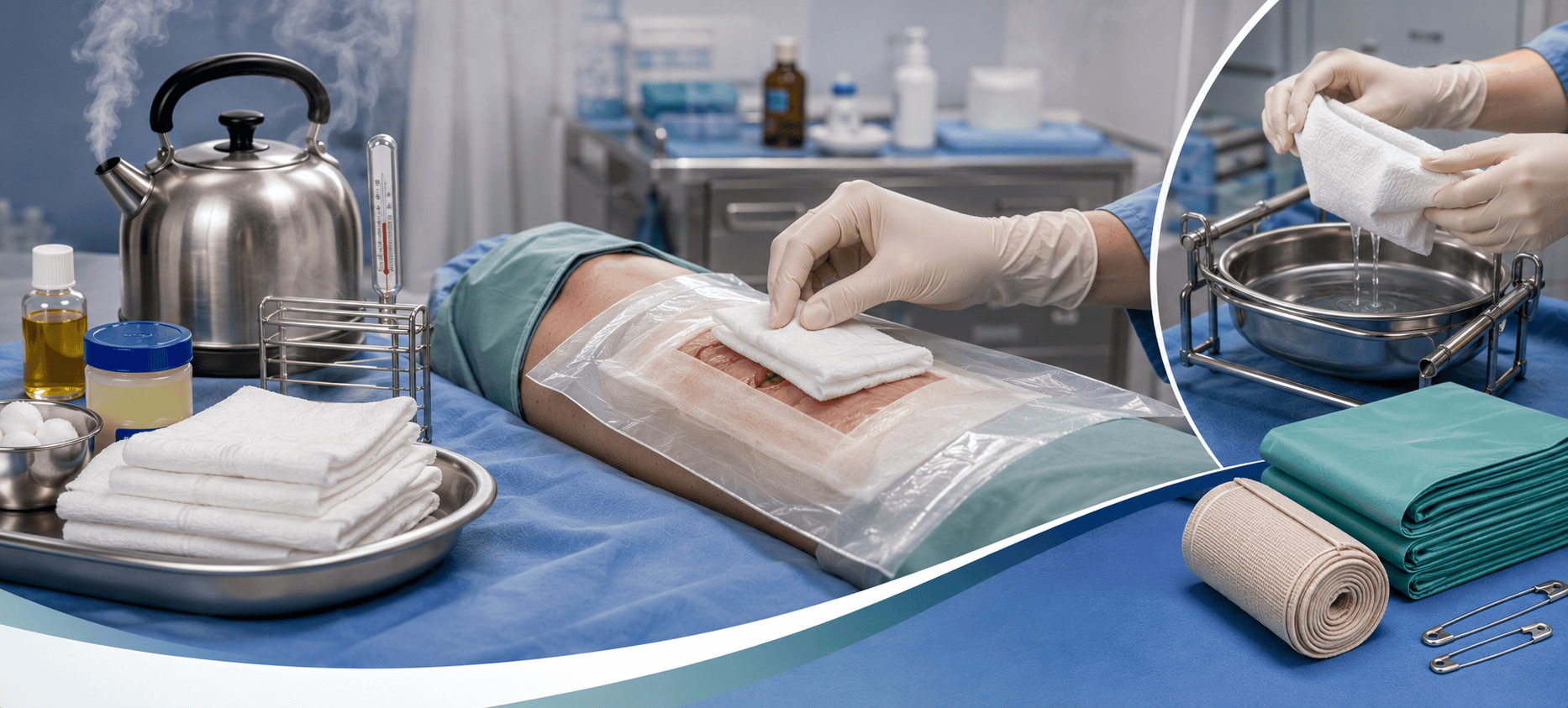
Surgical fomentation is a specialized moist heat application used on open wounds and broken skin to relieve pain, reduce swelling, and promote wound healing. This guide covers the complete procedure, equipment, sterile precautions, and nursing considerations.
At a Glance
- For open wounds & broken skin
- Relieves pain & muscle spasm
- Requires strict sterile technique
Introduction to Surgical Fomentation
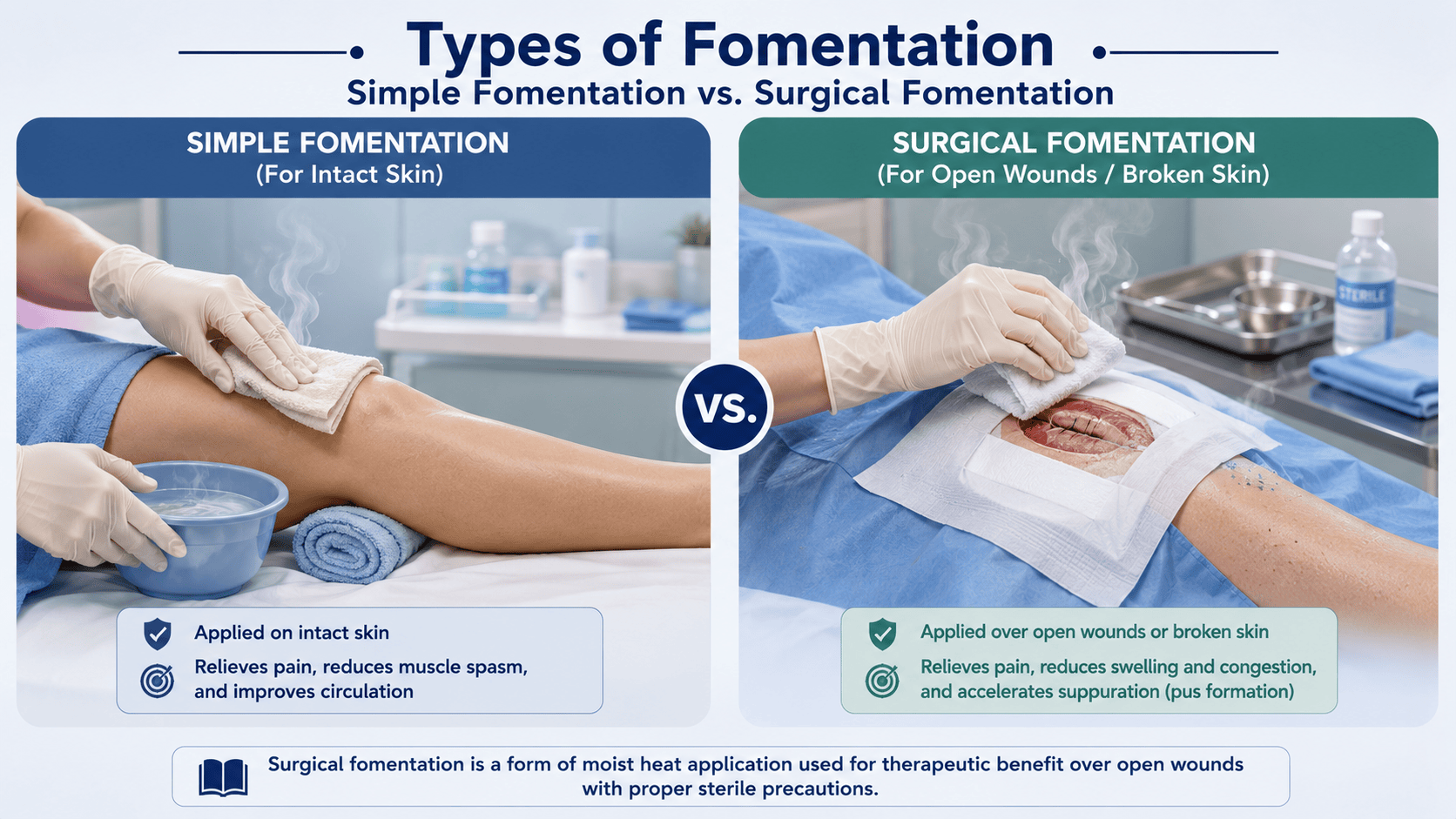
Surgical fomentation is a specialized form of moist heat application used specifically for open wounds or broken skin. Unlike simple or medicated fomentations applied to intact skin, surgical fomentation is performed over areas where the skin barrier is compromised, such as post-operative incisions, abscesses, or traumatic wounds. The primary purpose is to relieve pain and muscle spasm, reduce swelling and congestion, and accelerate the process of suppuration (pus formation) in infected wounds. The term “fomentation” itself comes from the Latin fomentum, meaning a warm application or lotion, derived from fovere, “to warm or keep warm”. Historically, fomentations have been described in medical texts since as early as 1314, making it one of the oldest documented nursing interventions.
Purpose and Indications
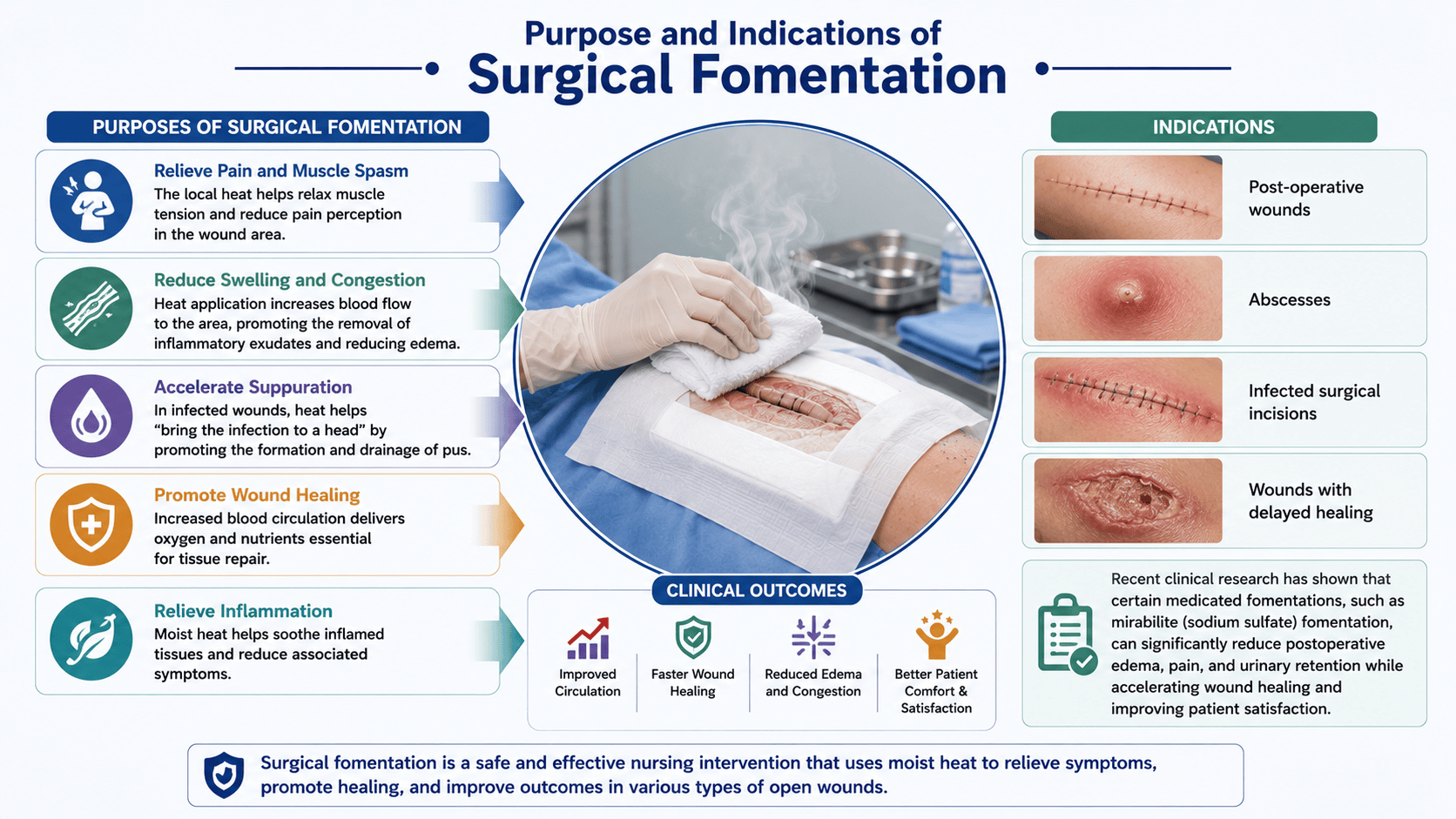
Surgical fomentation serves several critical purposes in wound management:
Relieve Pain and Muscle Spasm – The local heat helps relax muscle tension and reduce pain perception in the wound area.
Reduce Swelling and Congestion – Heat application increases blood flow to the area, promoting the removal of inflammatory exudates and reducing edema.
Accelerate Suppuration – In infected wounds, heat helps “bring the infection to a head” by promoting the formation and drainage of pus.
Promote Wound Healing – Increased blood circulation delivers oxygen and nutrients essential for tissue repair.
Relieve Inflammation – Moist heat helps soothe inflamed tissues and reduce associated symptoms.
Surgical fomentation is particularly indicated for post-operative wounds, abscesses, infected surgical incisions, and wounds with delayed healing. Recent clinical research has also demonstrated that certain medicated fomentations, such as mirabilite (sodium sulfate) fomentation, can significantly reduce postoperative edema, pain, and urinary retention while accelerating wound healing and improving patient satisfaction.
Required Equipment and Materials
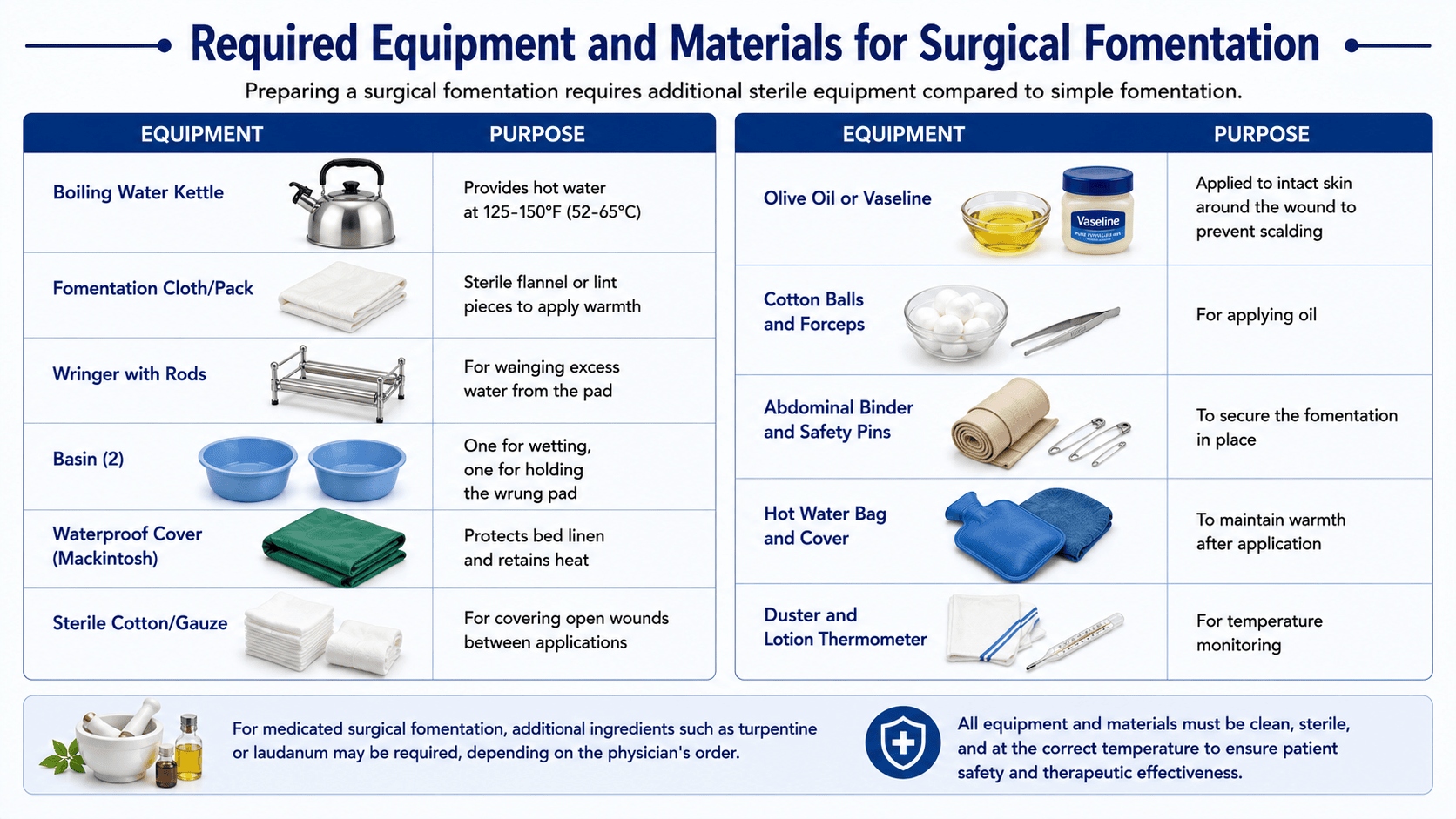
Preparing a surgical fomentation requires additional sterile equipment compared to simple fomentation:
| Equipment | Purpose |
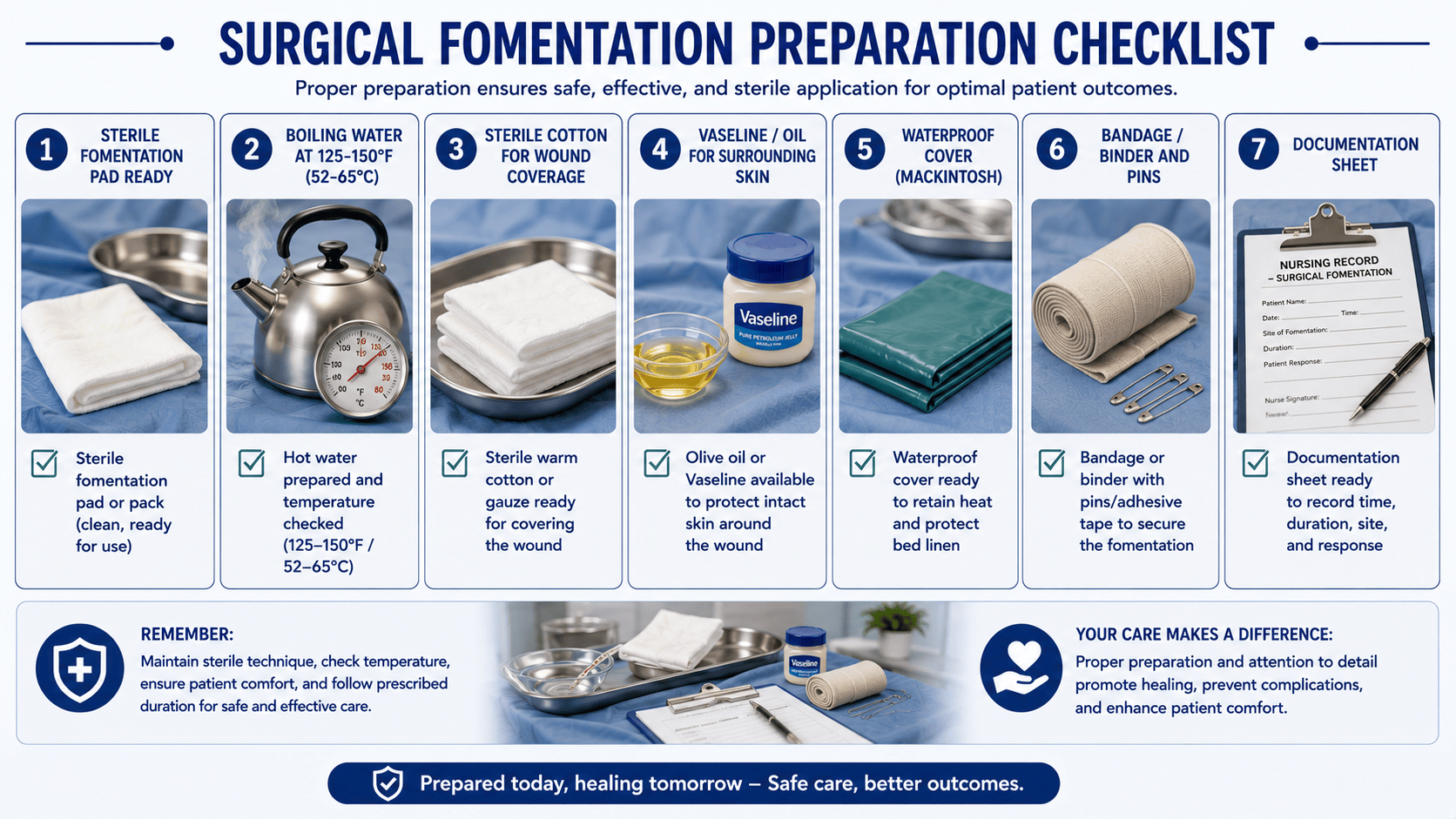
| Boiling water kettle | Provides hot water at 125-150°F |
| Fomentation cloth/pack | Sterile flannel or lint pieces to apply warmth |
| Wringer with rods | For wringing excess water from the pad |
| Basin (2) | One for wetting, one for holding the wrung pad |
| Waterproof cover (Mackintosh) | Protects bed linen and retains heat |
| Sterile cotton/gauze | For covering open wounds between applications |
| Olive oil or Vaseline | Applied to intact skin around the wound to prevent scalding |
| Cotton balls and forceps | For applying oil |
| Abdominal binder and safety pins | To secure the fomentation in place |
| Hot water bag and cover | To maintain warmth after application |
| Duster and lotion thermometer | For temperature monitoring |
For medicated surgical fomentation, additional ingredients such as turpentine or laudanum may be required, depending on the physician’s order.
Step-by-Step Procedure
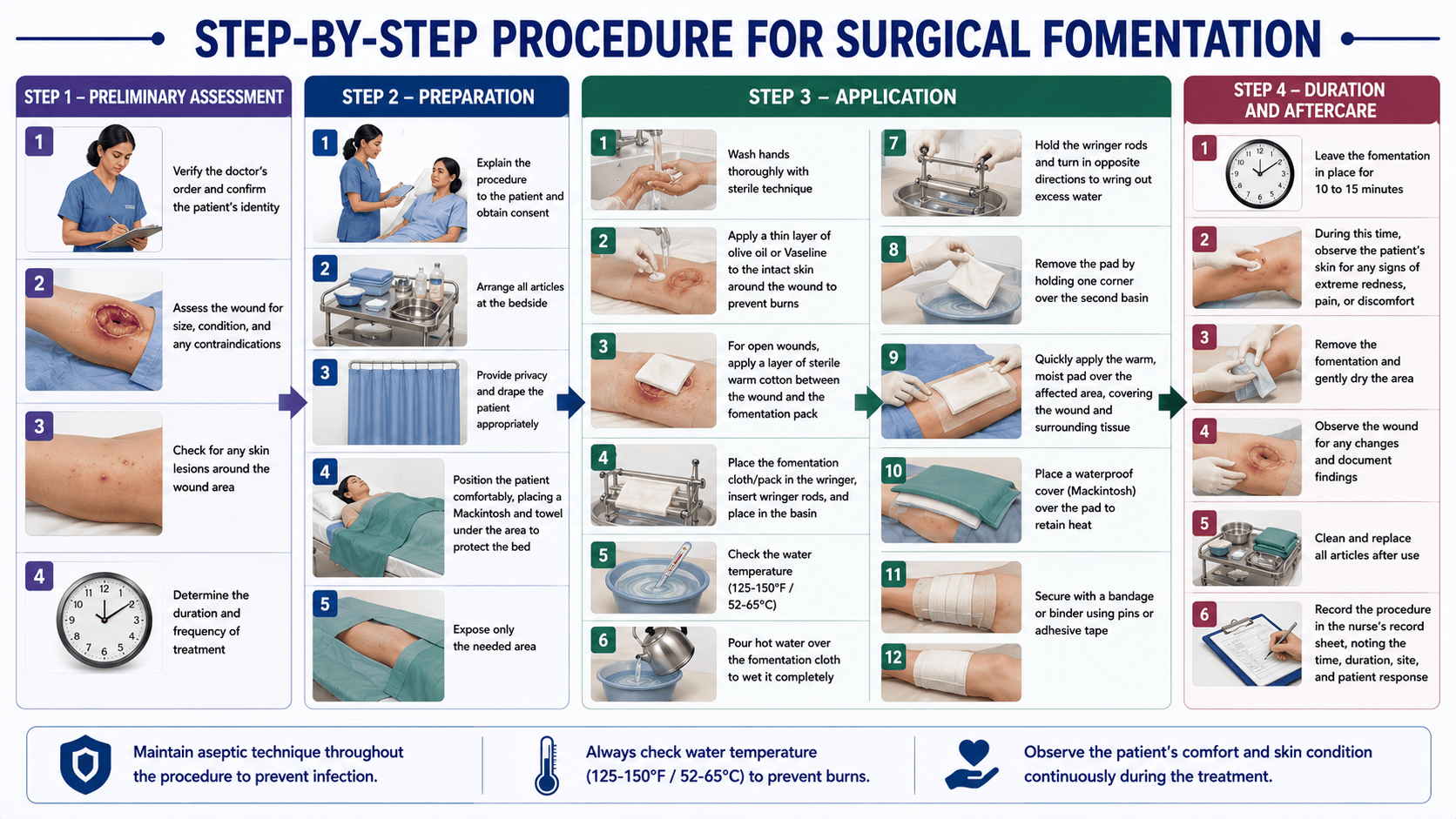
Step 1 – Preliminary Assessment:
- Verify the doctor’s order and confirm the patient’s identity
- Assess the wound for size, condition, and any contraindications
- Check for any skin lesions around the wound area
- Determine the duration and frequency of treatment
Step 2 – Preparation:
- Explain the procedure to the patient and obtain consent
- Arrange all articles at the bedside
- Provide privacy and drape the patient appropriately
- Position the patient comfortably, placing a Mackintosh and towel under the area to protect the bed
- Expose only the needed area
Step 3 – Application:
- Wash hands thoroughly with sterile technique
- Apply a thin layer of olive oil or Vaseline to the intact skin around the wound to prevent burns
- For open wounds, apply a layer of sterile warm cotton between the wound and the fomentation pack
- Place the fomentation cloth/pack in the wringer, insert wringer rods, and place in the basin
- Check the water temperature (125-150°F / 52-65°C)
- Pour hot water over the fomentation cloth to wet it completely
- Hold the wringer rods and turn in opposite directions to wring out excess water
- Remove the pad by holding one corner over the second basin
- Quickly apply the warm, moist pad over the affected area, covering the wound and surrounding tissue
- Place a waterproof cover (Mackintosh) over the pad to retain heat
- Secure with a bandage or binder using pins or adhesive tape
Step 4 – Duration and Aftercare:
- Leave the fomentation in place for 10 to 15 minutes
- During this time, observe the patient’s skin for any signs of extreme redness, pain, or discomfort
- Remove the fomentation and gently dry the area
- Observe the wound for any changes and document findings
- Clean and replace all articles after use
- Record the procedure in the nurse’s record sheet, noting the time, duration, site, and patient response
Sterile Precautions and Nursing Considerations
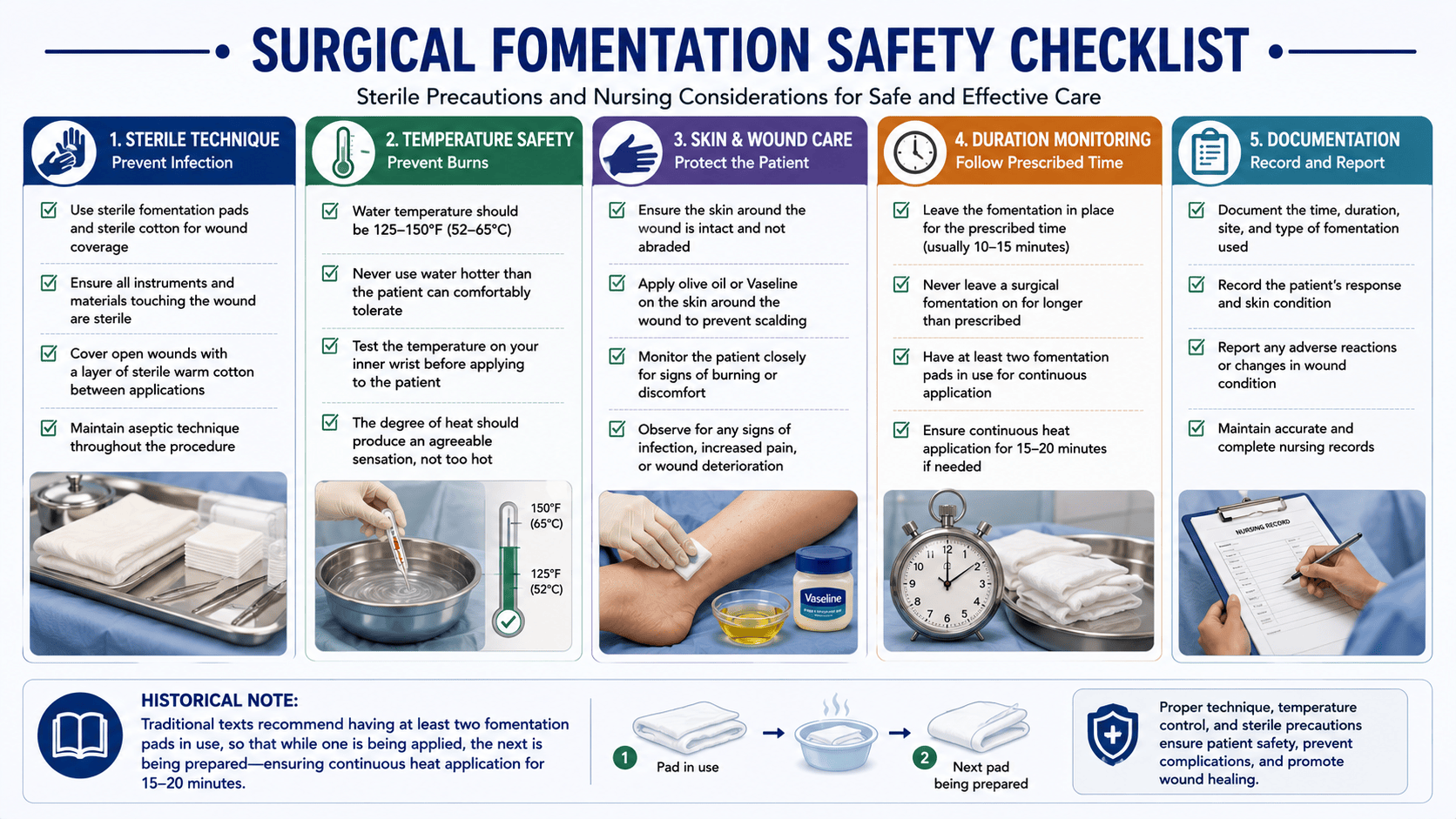
When performing surgical fomentation on open wounds, strict adherence to sterile precautions is essential:
Infection Prevention:
For patients using a cardiac bed, proper positioning is crucial. The patient is placed in a semi-sitting position with the upper body high; at the same time, the legs are positioned low so that venous return to the heart is reduced. The low positioning of the legs distinguishes the cardiac bed from simple upper body elevation.
- Use sterile fomentation pads and sterile cotton for wound coverage
- Ensure all instruments and materials touching the wound are sterile
- The skin is covered with a layer of sterile warm cotton in case of open wound until a fresh application is made, if any interval of time elapses between the removal of one and the application of the next
Temperature Safety:
- The degree of heat should on no account exceed that of producing an agreeable sensation; too great heat can cause burns and tissue damage
- The water temperature for surgical fomentation should be carefully controlled—the general recommendation is 125-150°F (52-65°C), but it should never be hotter than the patient can comfortably tolerate
- Always test the temperature on your own inner wrist before applying to the patient
General Considerations:
- Make sure the skin around the wound is intact and not abraded
- Apply olive oil or Vaseline on the skin around the wound to prevent scalding
- Monitor the patient closely for signs of burning or discomfort
- Never leave a surgical fomentation on for longer than prescribed
- Observe for any signs of infection, increased pain, or wound deterioration after application
Historical Note: Traditional texts recommend having at least two fomentation pads in use, so that while one is being applied, the next is being prepared, ensuring continuous heat application for 15-20 minutes.
Conclusion
Surgical fomentation remains a valuable nursing intervention for managing open wounds, post-operative incisions, and infected areas. By applying controlled, moist heat with strict sterile technique, nurses can effectively relieve pain, reduce swelling, promote suppuration, and accelerate wound healing. This age-old procedure, documented since ancient times, continues to be relevant in modern healthcare settings, especially when combined with appropriate wound care and patient monitoring.
For healthcare professionals, mastering the surgical fomentation procedure is an essential skill that combines knowledge of wound physiology with practical clinical expertise. With proper technique, attention to sterile precautions, and careful patient monitoring, surgical fomentation can significantly improve patient outcomes and recovery experiences.
For more information about surgical fomentation, contact us