
Mouth care is a fundamental nursing procedure that prevents infection, maintains comfort, and promotes dignity for all patients. This guide covers the complete procedure, equipment needed, and special considerations for conscious, unconscious, and NPO patients.
At a Glance
- Prevents infection, plaque, and mouth sores
- Essential for all hospitalized and bedridden patients
- Special techniques for denture wearers and unconscious patients
Introduction to Mouth Care
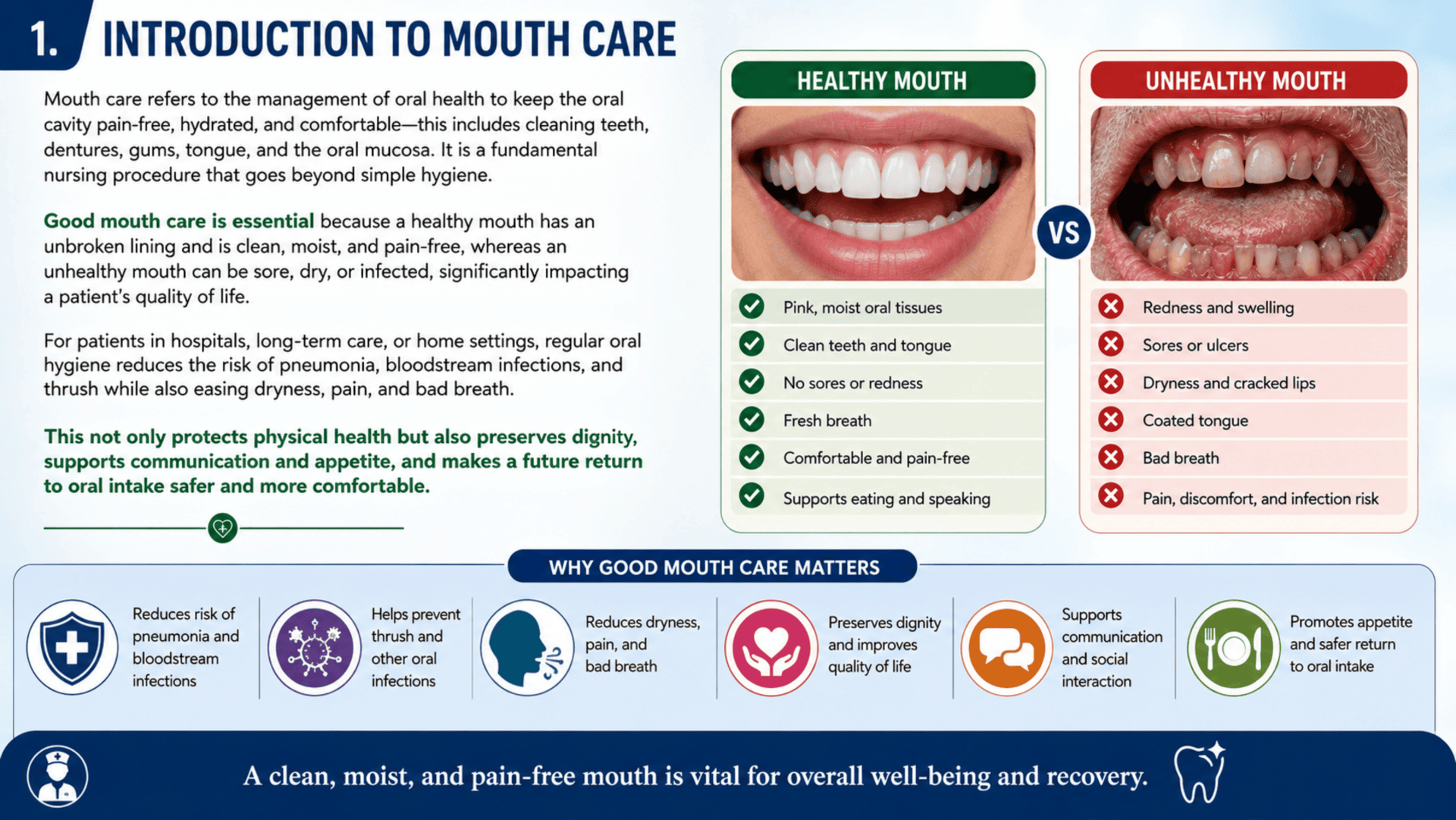
Mouth care refers to the management of oral health to keep the oral cavity pain-free, hydrated, and comfortable—this includes cleaning teeth, dentures, gums, tongue, and the oral mucosa. It is a fundamental nursing procedure that goes beyond simple hygiene. Good mouth care is essential because a healthy mouth has an unbroken lining and is clean, moist, and pain-free, whereas an unhealthy mouth can be sore, dry, or infected, significantly impacting a patient’s quality of life. For patients in hospitals, long-term care, or home settings, regular oral hygiene reduces the risk of pneumonia, bloodstream infections, and thrush while also easing dryness, pain, and bad breath. This not only protects physical health but also preserves dignity, supports communication and appetite, and makes a future return to oral intake safer and more comfortable.
Importance and Frequency of Mouth Care
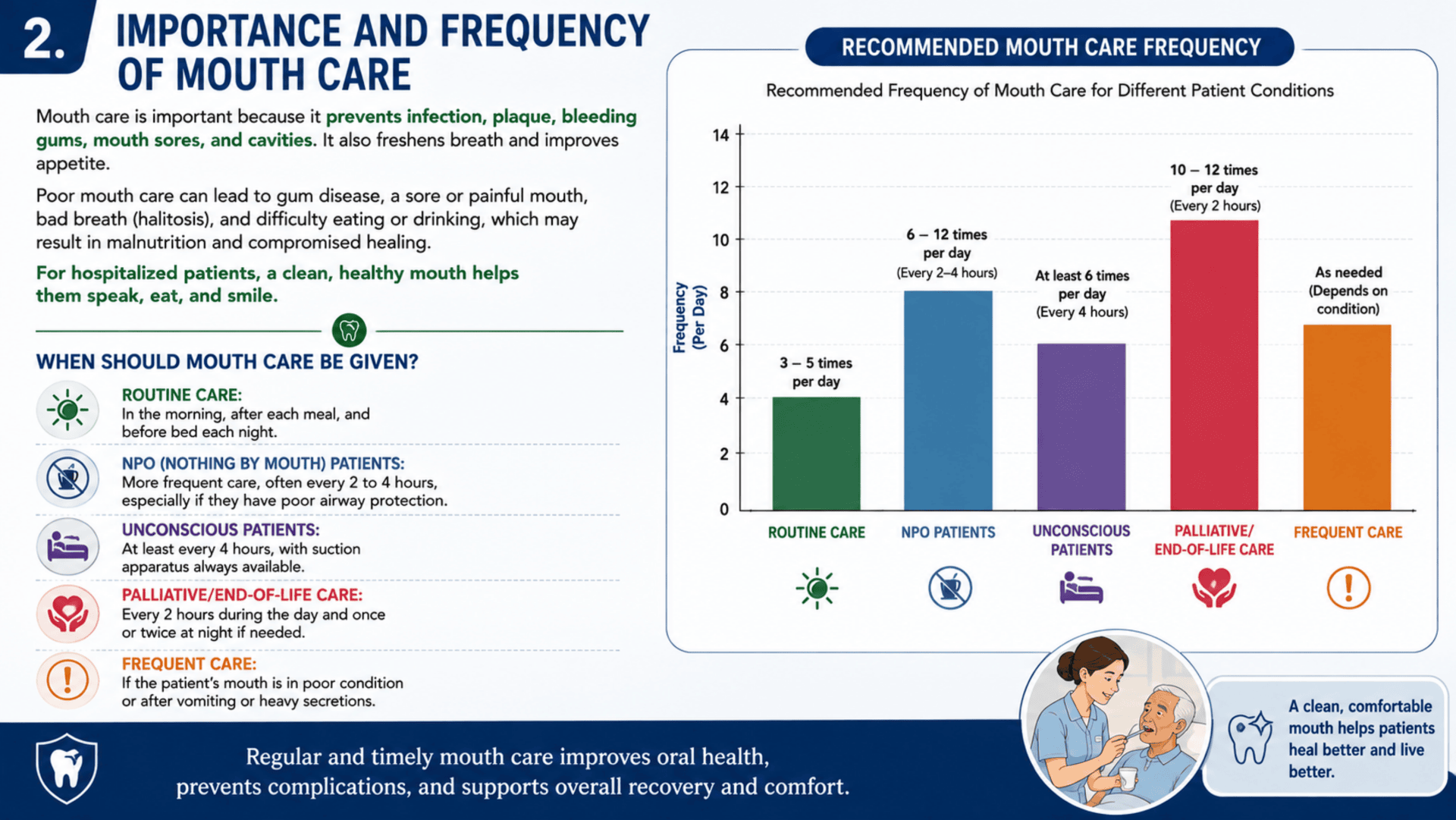
Mouth care is important because it prevents infection, plaque, bleeding gums, mouth sores, and cavities. It also freshens breath and improves appetite. Poor mouth care can lead to gum disease, a sore or painful mouth, bad breath (halitosis), and difficulty eating or drinking, which may result in malnutrition and compromised healing. For hospitalized patients, a clean, healthy mouth helps them speak, eat, and smile.
When should mouth care be given?
- Routine care: In the morning, after each meal, and before bed each night
- NPO (nothing by mouth) patients: More frequent care, often every 2 to 4 hours, especially if they have poor airway protection
- Unconscious patients: At least every 4 hours, with suction apparatus always available
- Palliative/end-of-life care: Every 2 hours during the day and once or twice at night if needed
- Frequent care: If the patient’s mouth is in poor condition or after vomiting or heavy secretions
Required Equipment and Materials
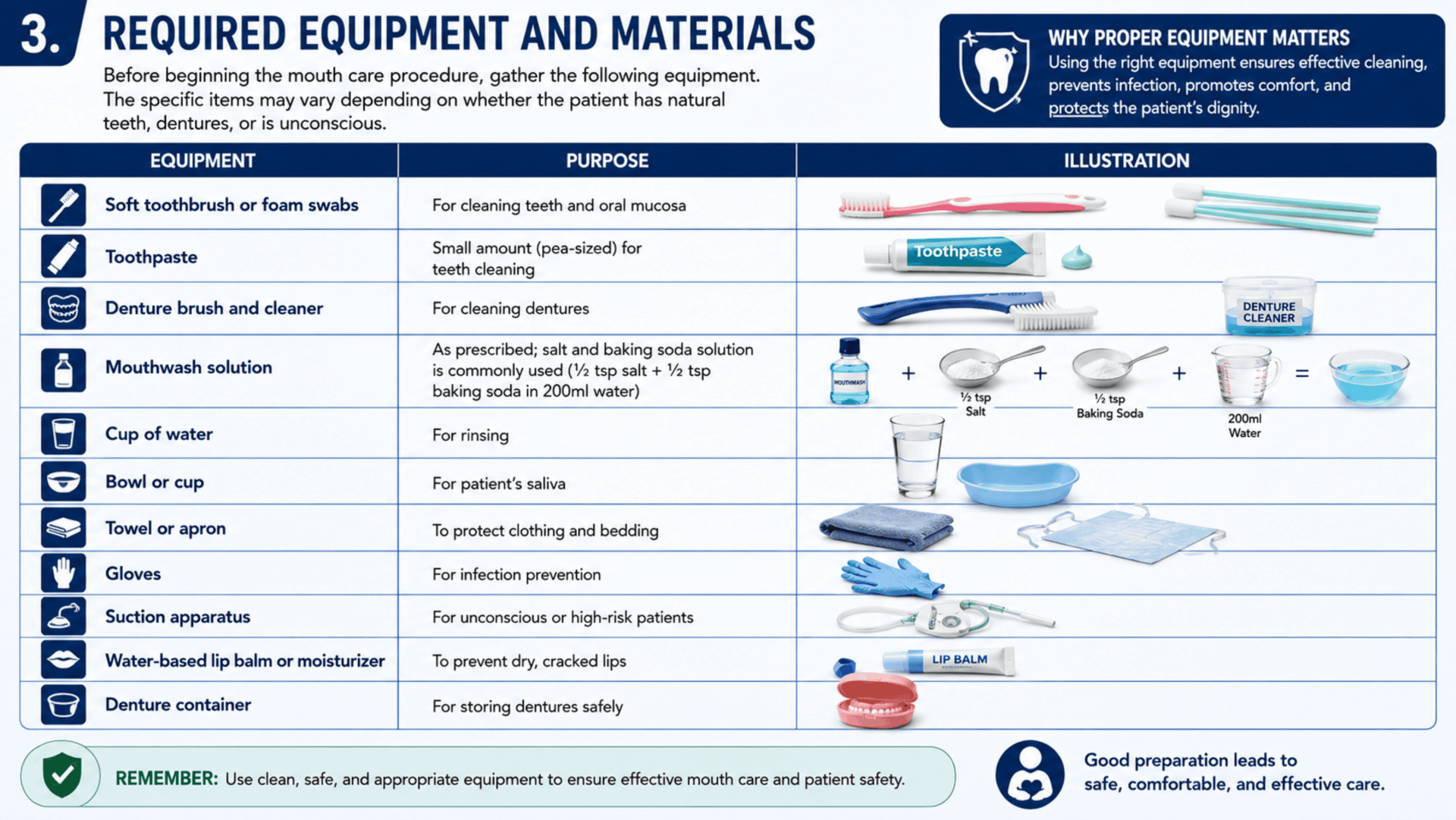
Before beginning the mouth care procedure, gather the following equipment. The specific items may vary depending on whether the patient has natural teeth, dentures, or is unconscious:
| Equipment | Purpose |
| Soft toothbrush or foam swabs | For cleaning teeth and oral mucosa |
| Toothpaste | Small amount (pea-sized) for teeth cleaning |
| Denture brush and cleaner | For cleaning dentures |
| Mouthwash solution | As prescribed; salt and baking soda solution is commonly used (½ tsp salt + ½ tsp baking soda in 200ml water) |
| Cup of water | For rinsing |
| Bowl or cup | For patient’s saliva |
| Towel or apron | To protect clothing and bedding |
| Gloves | For infection prevention |
| Suction apparatus | For unconscious or high-risk patients |
| Water-based lip balm or moisturizer | To prevent dry, cracked lips |
| Denture container | For storing dentures safely |
Step-by-Step Procedure for Conscious Patient
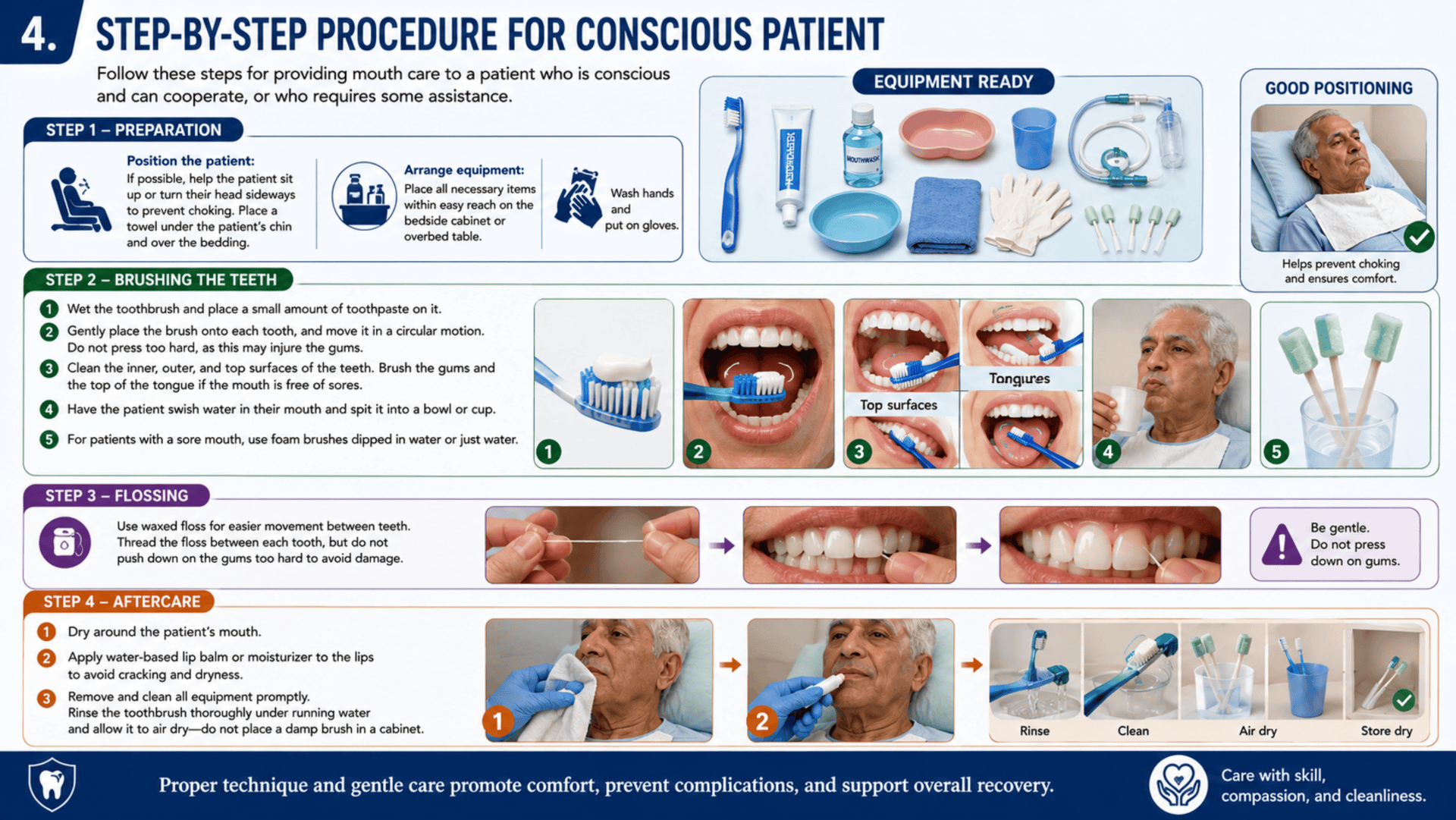
Follow these steps for providing mouth care to a patient who is conscious and can cooperate, or who requires some assistance:
Step 1 – Preparation:
- Position the patient: If possible, help the patient sit up or turn their head sideways to prevent choking. Place a towel under the patient’s chin and over the bedding.
- Arrange equipment: Place all necessary items within easy reach on the bedside cabinet or overbed table.
- Wash hands and put on gloves.
Step 2 – Brushing the teeth:
- Wet the toothbrush and place a small amount of toothpaste on it.
- Gently place the brush onto each tooth, and move it in a circular motion. Do not press too hard, as this may injure the gums.
- Clean the inner, outer, and top surfaces of the teeth. Brush the gums and the top of the tongue if the mouth is free of sores.
- Have the patient swish water in their mouth and spit it into a bowl or cup.
- For patients with a sore mouth, use foam brushes dipped in water or just water.
Step 3 – Flossing:
- Use waxed floss for easier movement between teeth. Thread the floss between each tooth, but do not push down on the gums too hard to avoid damage.
Step 4 – Aftercare:
- Dry around the patient’s mouth.
- Apply water-based lip balm or moisturizer to the lips to avoid cracking and dryness.
- Remove and clean all equipment promptly. Rinse the toothbrush thoroughly under running water and allow it to air dry—do not place a damp brush in a cabinet.
Special Considerations: Unconscious Patients, Denture Care, and NPO Patients
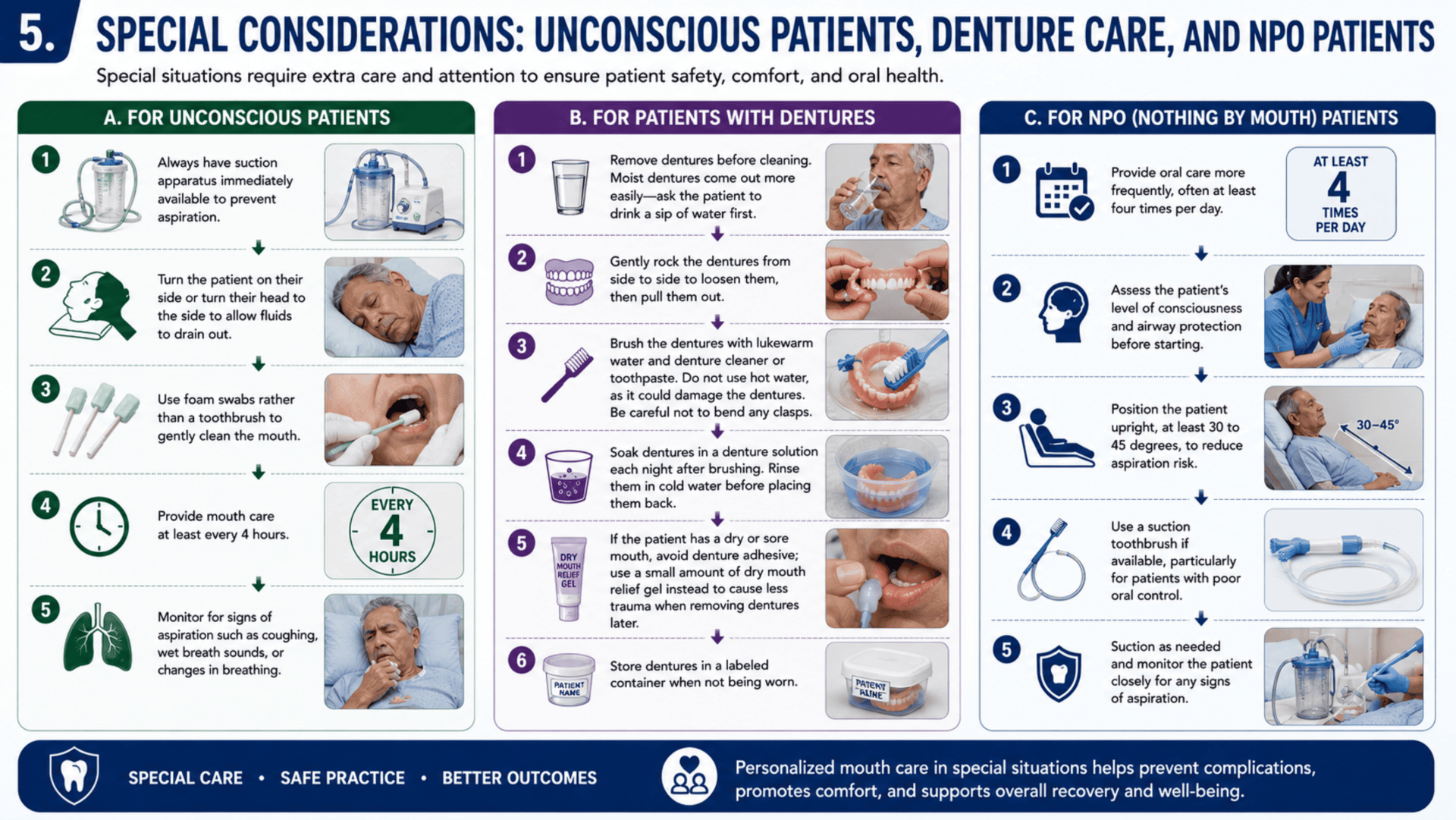
For unconscious patients:
- Always have suction apparatus immediately available to prevent aspiration.
- Turn the patient on their side or turn their head to the side to allow fluids to drain out.
- Use foam swabs rather than a toothbrush to gently clean the mouth.
- Provide mouth care at least every 4 hours.
For patients with dentures:
- Remove dentures before cleaning. Moist dentures come out more easily—ask the patient to drink a sip of water first.
- Gently rock the dentures from side to side to loosen them, then pull them out.
- Brush the dentures with lukewarm water and denture cleaner or toothpaste. Do not use hot water, as it could damage the dentures. Be careful not to bend any clasps.
- Soak dentures in a denture solution each night after brushing. Rinse them in cold water before placing them back.
- If the patient has a dry or sore mouth, avoid denture adhesive; use a small amount of dry mouth relief gel instead to cause less trauma when removing dentures later.
- Store dentures in a labeled container when not being worn.
For NPO (nothing by mouth) patients:
- Provide oral care more frequently, often at least four times per day.
- Assess the patient’s level of consciousness and airway protection before starting.
- Position the patient upright, at least 30 to 45 degrees, to reduce aspiration risk.
- Use a suction toothbrush if available, particularly for patients with poor oral control.
Nursing Considerations and When to Contact a Healthcare Provider
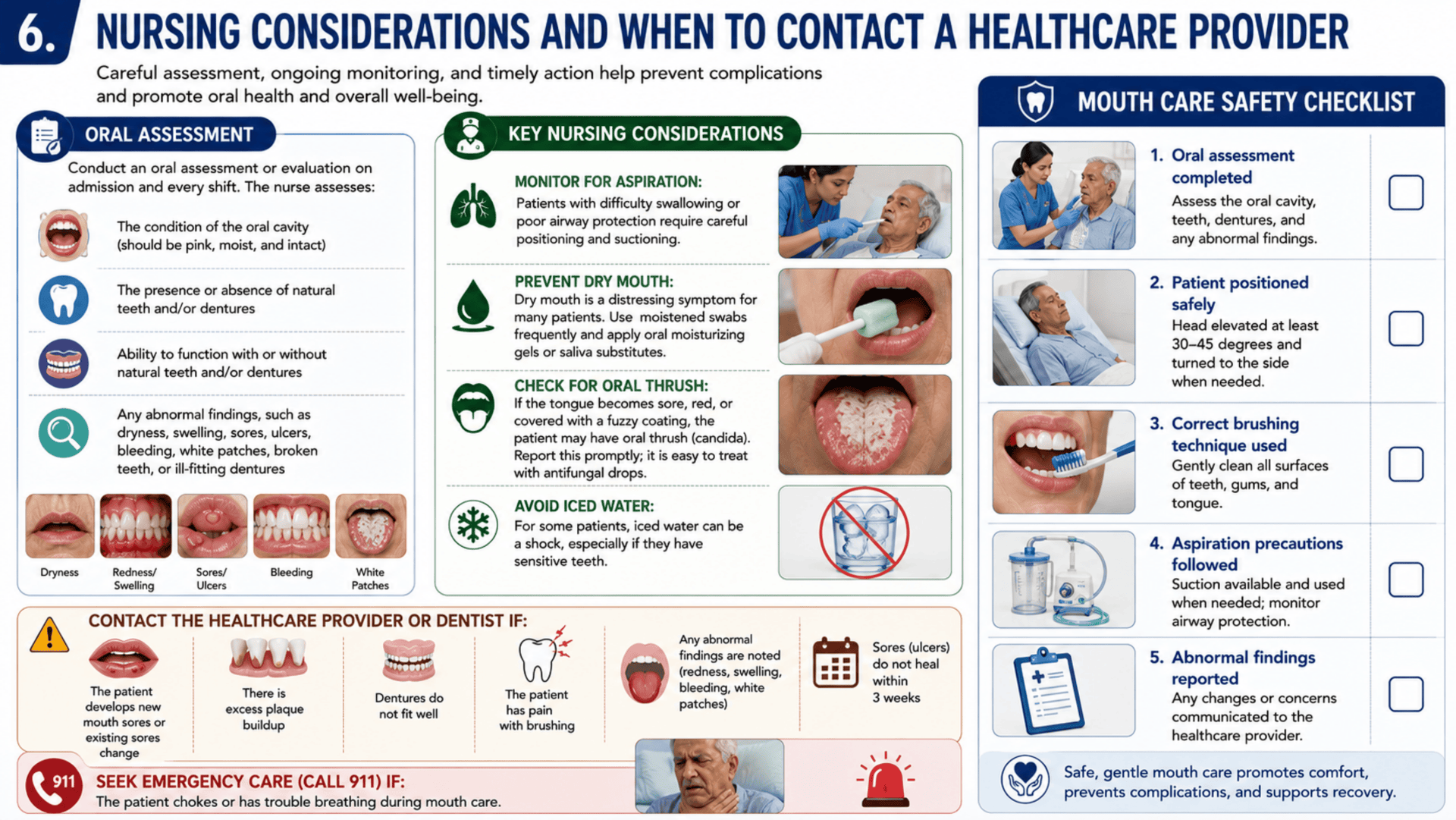
Oral Assessment:
Conduct an oral assessment or evaluation on admission and every shift. The nurse assesses:
- The condition of the oral cavity (should be pink, moist, and intact)
- The presence or absence of natural teeth and/or dentures
- Ability to function with or without natural teeth and/or dentures
- Any abnormal findings, such as dryness, swelling, sores, ulcers, bleeding, white patches, broken teeth, or ill-fitting dentures
Key Nursing Considerations:
- Monitor for aspiration: Patients with difficulty swallowing or poor airway protection require careful positioning and suctioning.
- Prevent dry mouth: Dry mouth is a distressing symptom for many patients. Use moistened swabs frequently and apply oral moisturizing gels or saliva substitutes.
- Check for oral thrush: If the tongue becomes sore, red, or covered with a fuzzy coating, the patient may have oral thrush (candida). Report this promptly; it is easy to treat with antifungal drops.
- Avoid iced water: For some patients, iced water can be a shock, especially if they have sensitive teeth.
Contact the healthcare provider or dentist if:
- The patient develops new mouth sores or existing sores change
- There is excess plaque buildup
- Dentures do not fit well
- The patient has pain with brushing
- Any abnormal findings are noted (redness, swelling, bleeding, white patches)
- Sores (ulcers) do not heal within 3 weeks
- Seek emergency care (call 911) if:
- The patient chokes or has trouble breathing during mouth care
Conclusion
Mouth care is a simple yet vital nursing procedure that prevents infection, maintains comfort, and promotes patient dignity. Whether providing care for a conscious patient, an unconscious patient, or someone with dentures, following the correct steps and observing safety precautions ensures the best outcomes. By understanding the importance of oral hygiene and the special considerations for different patient populations, healthcare professionals and caregivers can significantly improve patient quality of life.
For more information about Mouth care, contact us