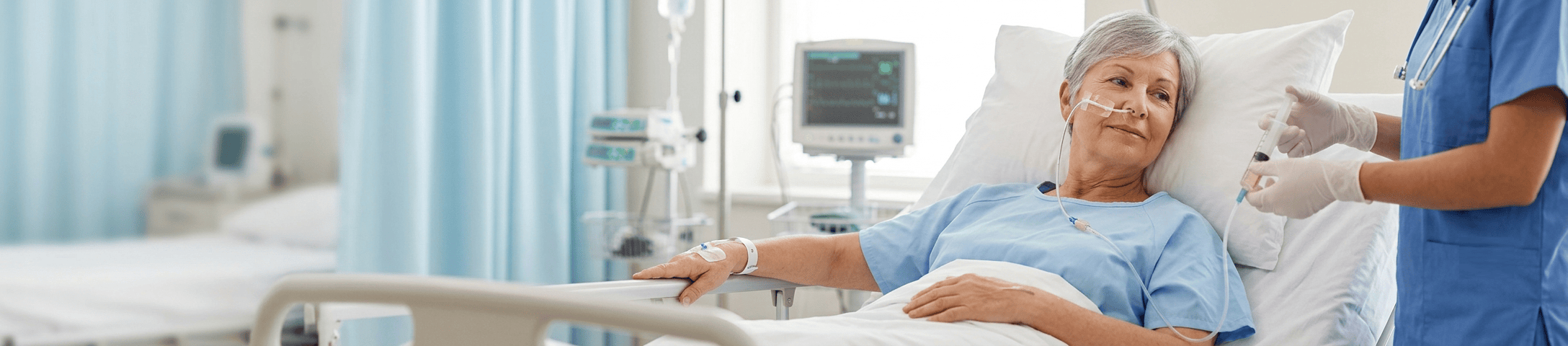
Mouth care is a fundamental nursing procedure that prevents infection, maintains comfort, and promotes dignity for all patients. This guide covers the complete procedure, equipment needed, and special considerations for conscious, unconscious, and NPO patients.
At a Glance
- Provides nutrition when oral intake is unsafe
- Requires strict placement verification before each use
- Essential for preventing aspiration and maintaining nutrition
Introduction to NG Tube Feeding
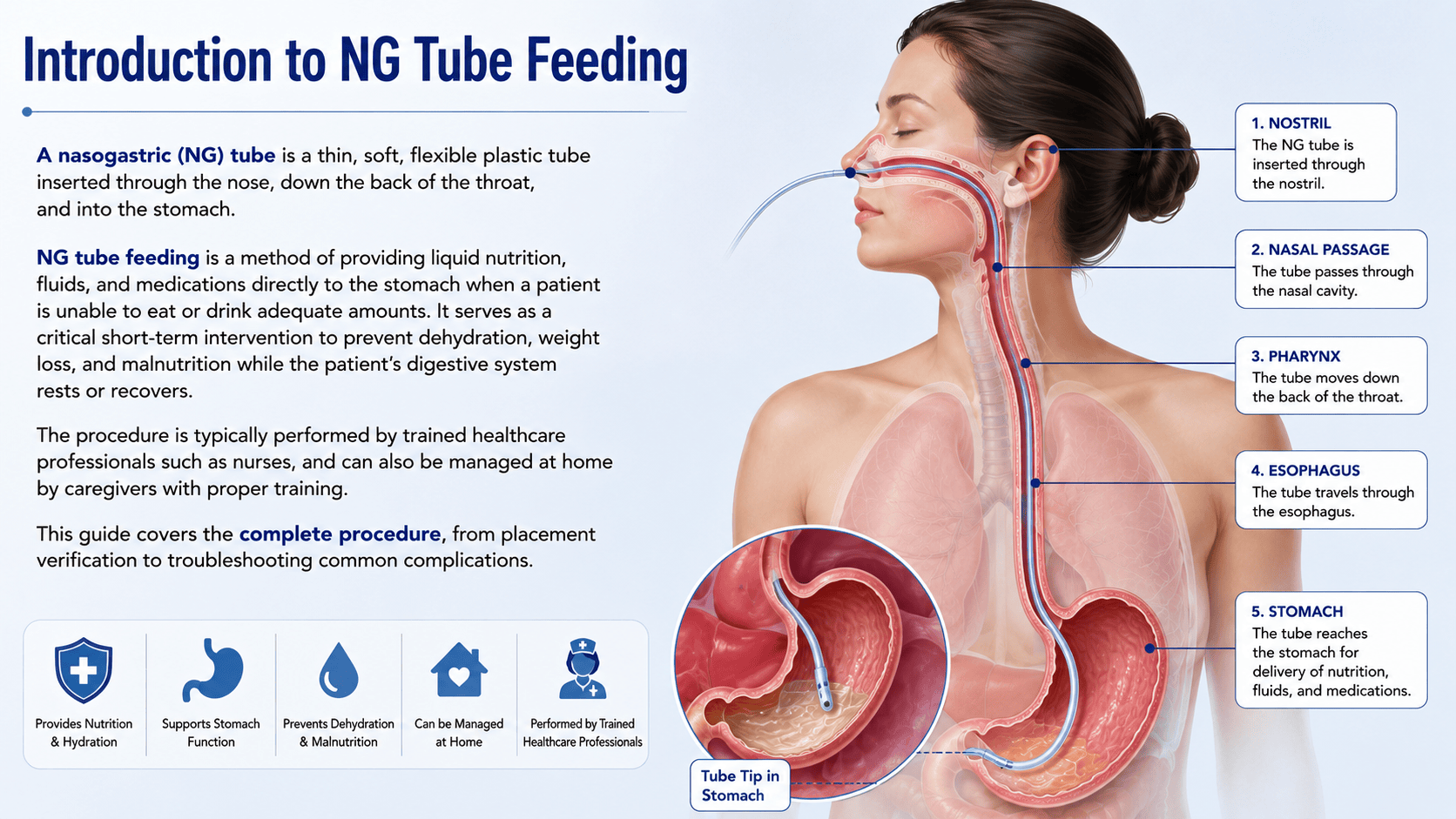
A nasogastric (NG) tube is a thin, soft, flexible plastic tube inserted through the nose, down the back of the throat, and into the stomach. NG tube feeding is a method of providing liquid nutrition, fluids, and medications directly to the stomach when a patient is unable to eat or drink adequate amounts. It serves as a critical short-term intervention to prevent dehydration, weight loss, and malnutrition while the patient’s digestive system rests or recovers. The procedure is typically performed by trained healthcare professionals such as nurses, and can also be managed at home by caregivers with proper training. This guide covers the complete procedure, from placement verification to troubleshooting common complications.
Purpose and Indications
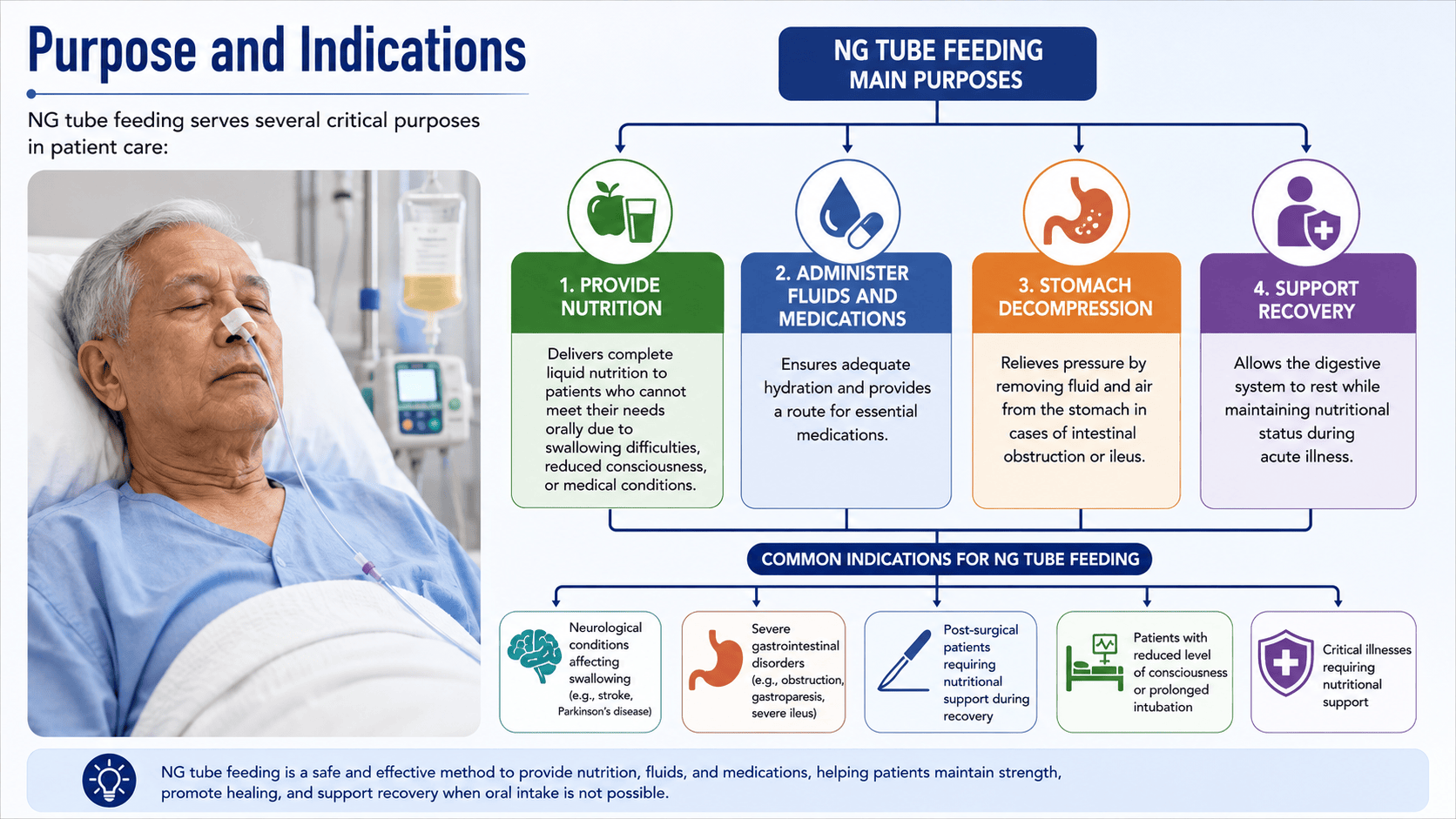
NG tube feeding serves several critical purposes in patient care:
- Provide Nutrition: Delivers complete liquid nutrition to patients who cannot meet their needs orally due to swallowing difficulties, reduced consciousness, or medical conditions.
- Administer Fluids and Medications – Ensures adequate hydration and provides a route for essential medications.
- Stomach Decompression – Relieves pressure by removing fluid and air from the stomach in cases of intestinal obstruction or ileus.
- Support Recovery – Allows the digestive system to rest while maintaining nutritional status during acute illness.
NG tubes are commonly used for patients with neurological conditions affecting swallowing, severe gastrointestinal disorders, post-surgical patients, and those with critical illnesses requiring nutritional support
Equipment and Preparation
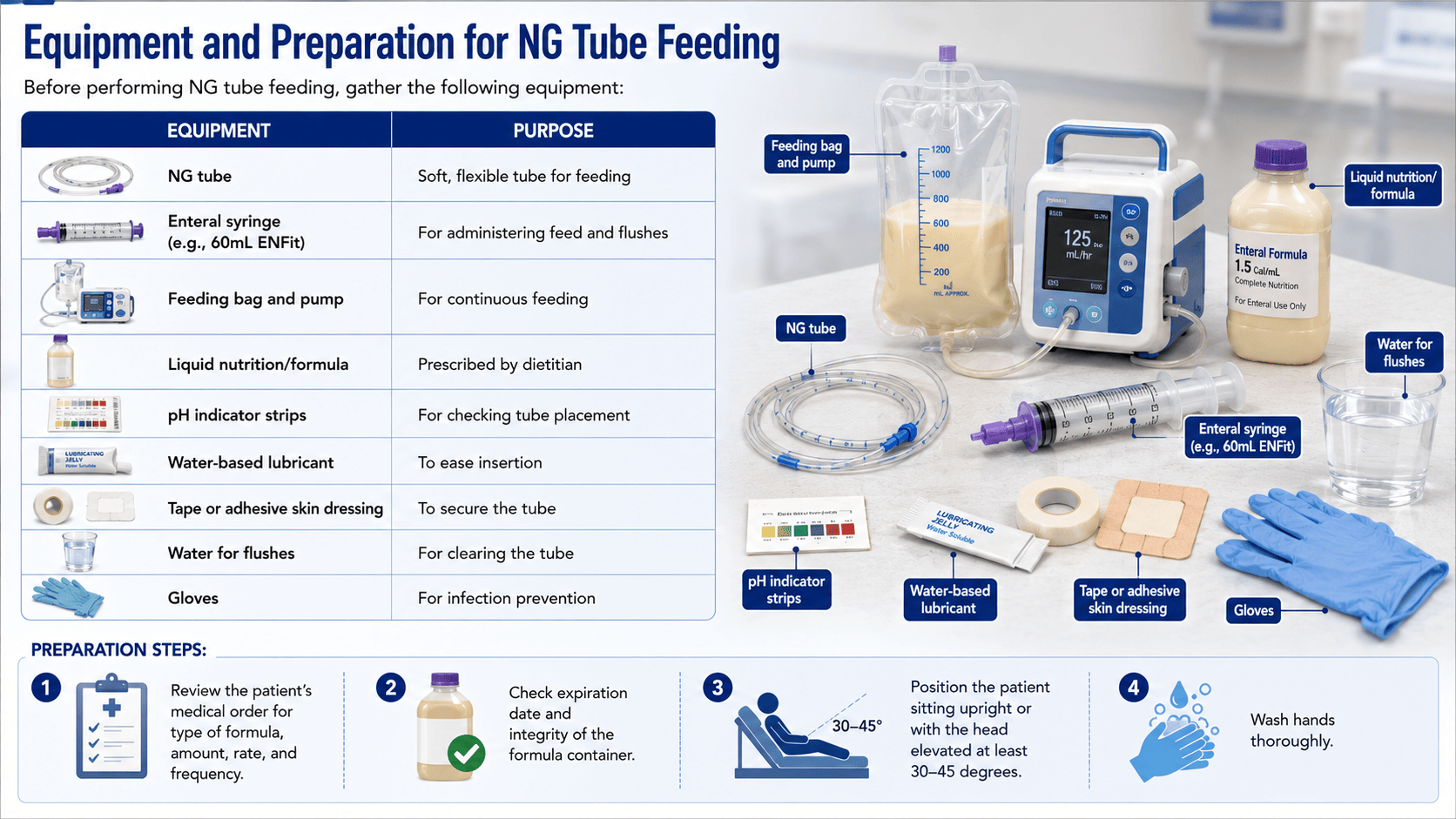
Before performing NG tube feeding, gather the following equipment:
| Equipment | Purpose |
| NG tube | Soft, flexible tube for feeding |
| Enteral syringe (e.g., 60mL ENFit) | For administering feed and flushes |
| Feeding bag and pump | For continuous feeding |
| Liquid nutrition/formula | Prescribed by dietitian |
| pH indicator strips | For checking tube placement |
| Water-based lubricant | To ease insertion |
| Tape or adhesive skin dressing | To secure the tube |
| Water for flushes | For clearing the tube |
| Gloves | For infection prevention |
Preparation Steps:
- Review the patient’s medical order for type of formula, amount, rate, and frequency.
- Check expiration date and integrity of the formula container.
- Position the patient sitting upright or with the head elevated at least 30–45 degrees.
- Wash hands thoroughly.
Step-by-Step Procedure for NG Tube Feeding
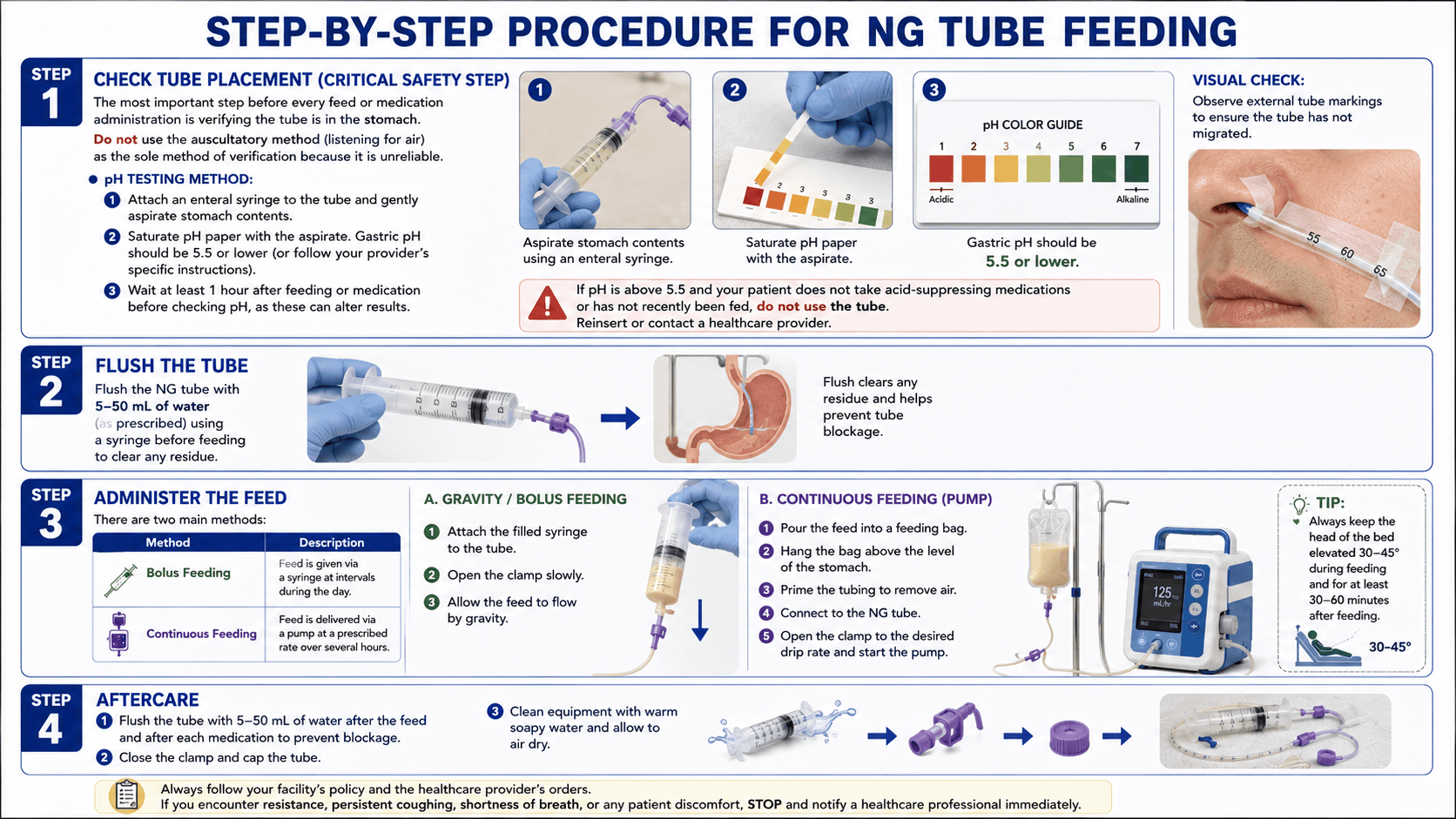
Step 1 – Check Tube Placement (Critical Safety Step)
The most important step before every feed or medication administration is verifying the tube is in the stomach. Do not use the auscultatory method (listening for air) as the sole method of verification because it is unreliable. Instead:
- pH Testing Method: Attach an enteral syringe to the tube and gently aspirate stomach contents.
- Saturate pH paper with the aspirate. Gastric pH should be 5.5 or lower (or follow your provider’s specific instructions).
- Wait at least 1 hour after feeding or medication before checking pH, as these can alter results.
- Visual Check: Observe external tube markings to ensure the tube has not migrated.
- If pH is above 5.5 and your patient does not take acid-suppressing medications or has not recently been fed, do not use the tube. Reinsert or contact a healthcare provider.
Step 2 – Flush the Tube
- Flush the NG tube with 5–50 mL of water (as prescribed) using a syringe before feeding to clear any residue.
Step 3 – Administer the Feed
- There are two main methods:
| Method | Description |
| Bolus Feeding | Feed is given via a syringe at intervals during the day |
| Continuous Feeding | Feed is delivered via a pump at a prescribed rate over several hours |
For Gravity/Bolus Feeding: Attach the filled syringe to the tube, open the clamp slowly, and allow the feed to flow by gravity. For Continuous Feeding: Pour the feed into a feeding bag, hang it above the level of the stomach, prime the tubing to remove air, connect to the NG tube, and open the clamp to the desired drip rate.
Step 4 – Aftercare
- Flush the tube with 5–50 mL of water after the feed and after each medication to prevent blockage.
- Close the clamp and cap the tube.
- Clean equipment with warm soapy water and allow to air dry.
Troubleshooting and Common Complications
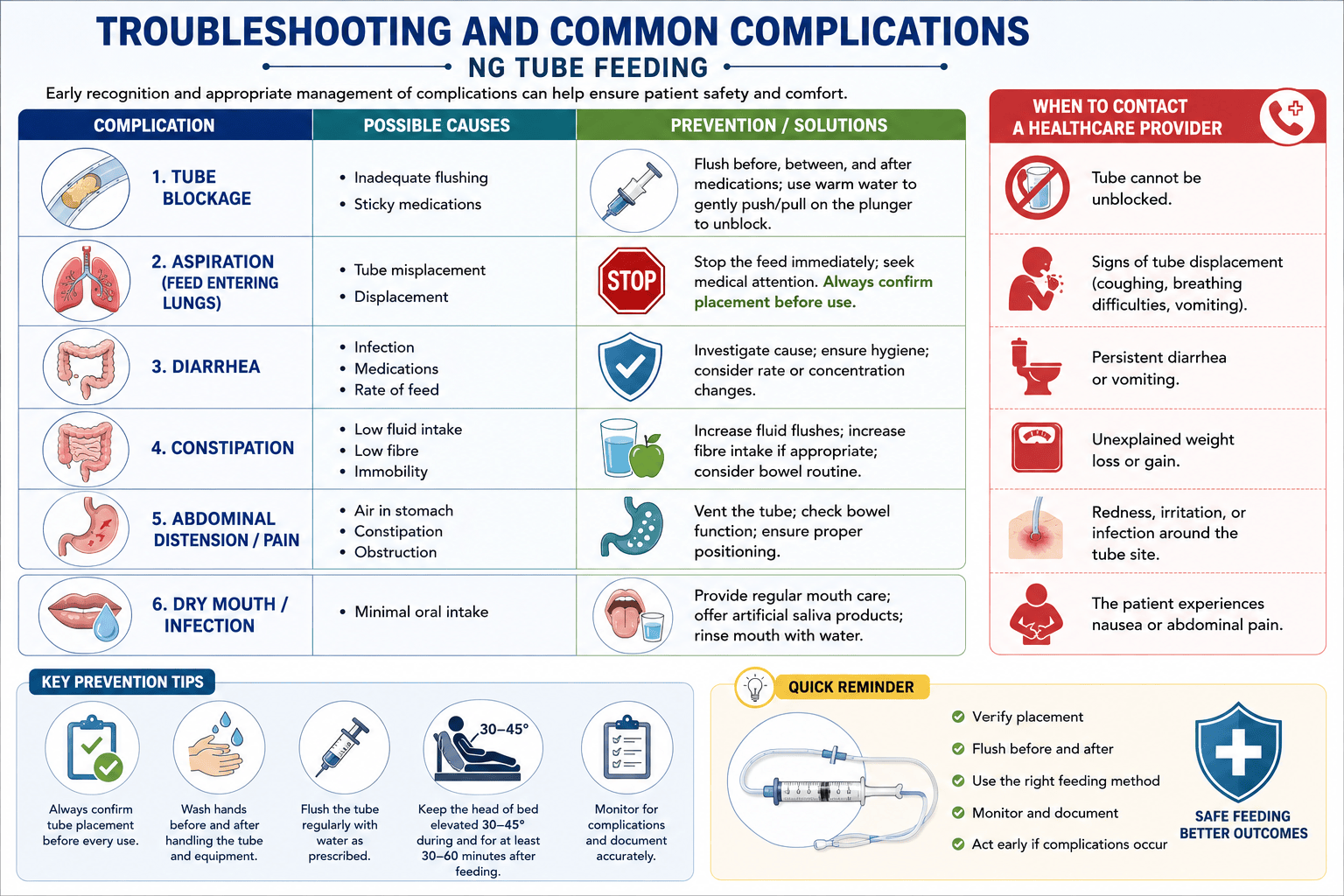
| Complication | Possible Causes | Prevention/Solutions |
| Tube Blockage | Inadequate flushing, sticky medications | Flush before, between, and after medications; use warm water to gently push/pull on the plunger to unblock |
| Aspiration (feed entering lungs | Tube misplacement, displacement | Stop the feed immediately; seek medical attention ; always confirm placement before use |
| Diarrhea | Infection, medications, rate of feed | Investigate cause; ensure hygiene; consider rate or concentration changes |
| Constipation | Low fluid intake, low fibre, immobility | Increase fluid flushes; increase fibre intake if appropriate; consider bowel routine |
| Abdominal distension/pain | Air in stomach, constipation, obstruction | Vent the tube; check bowel function; ensure proper positioning |
| Dry mouth/infection | Minimal oral intake | Provide regular mouth care; offer artificial saliva products; rinse mouth with water |
When to Contact a Healthcare Provider:
- Tube cannot be unblocked
- Signs of tube displacement (coughing, breathing difficulties, vomiting)
- Persistent diarrhea or vomiting
- Unexplained weight loss or gain
- Redness, irritation, or infection around the tube site
- The patient experiences nausea or abdominal pain
Key Nursing Considerations and Safety
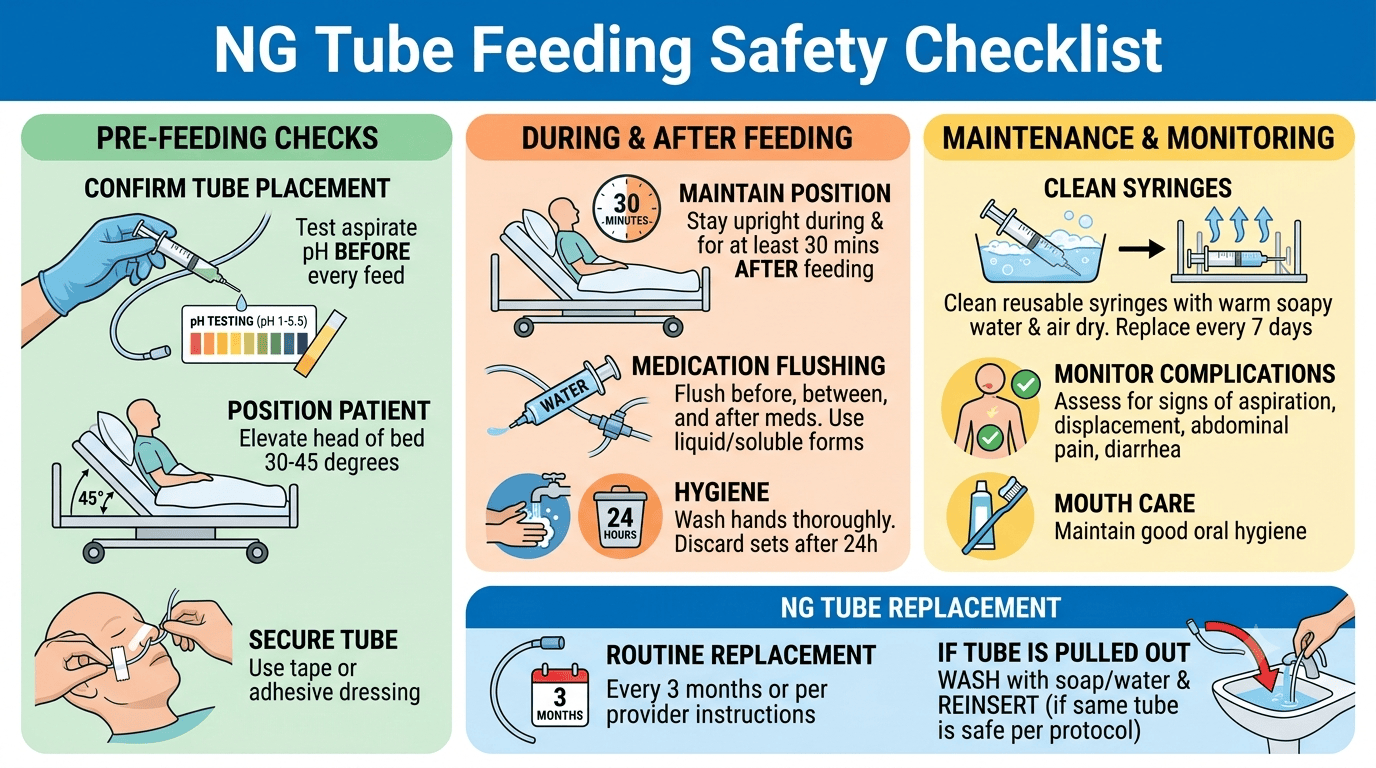
Critical Safety Checks:
- Confirm tube placement every time before use – pH testing is the recommended method.
- Position patient upright (at least 30–45°) during and for at least 30 minutes after feeding to prevent aspiration.
- Secure the tube with tape or adhesive skin dressing to prevent displacement.
General Considerations:
- Medications: Use liquid or soluble forms whenever possible to prevent blockages. Flush before, between, and after each different medication.
- Hygiene: Wash hands thoroughly before handling feeds and equipment. Discard feeding sets after 24 hours. Clean reusable syringes with warm soapy water and allow to air dry; replace every 7 days.
- Monitor for complications: Regularly assess for signs of aspiration, tube displacement, and gastrointestinal issues like abdominal pain, diarrhea, or constipation.
- Mouth care: Maintain good oral hygiene as oral intake is low.
NG Tube Replacement:
- Routine replacement is typically every 3 months or according to provider instructions.
- If the tube is pulled out, it is safe to reinsert the same tube after washing it.
Conclusion
For more information about NG Tube Feeding, contact us